
Introduction
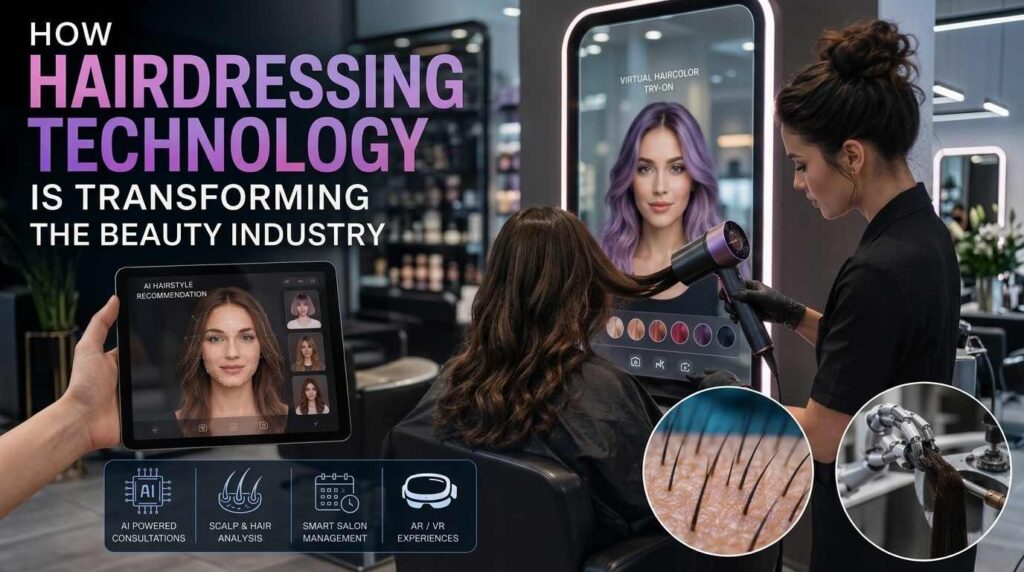
The beauty industry is evolving faster than ever, and professionals who fail to keep up with innovation risk falling behind. Traditional salon methods often struggle to meet modern customer expectations for personalization, efficiency, and advanced hair care solutions. This is where hairdressing technology is making a remarkable difference. From AI-powered consultations and smart styling tools to digital hair analysis and virtual hairstyle previews, technology is transforming how salons operate and serve their clients. In this article, you’ll discover how hairdressing technology is reshaping the beauty industry, improving customer experiences, enhancing salon efficiency, and driving the future of professional hair care.
What Is Hairdressing Technology?
Hairdressing technology refers to the use of modern tools, software, machines, and digital systems that assist hairstylists in performing hair-related services more efficiently and accurately. It combines traditional hairstyling techniques with technological innovation to improve service quality and customer satisfaction.
Hairdressing technology includes:
- Smart styling tools
- Artificial intelligence applications
- Hair and scalp analysis systems
- Digital consultation software
- Salon management systems
- Online booking platforms
- Automated color mixing machines
- Virtual reality and augmented reality applications
- Advanced treatment equipment
The goal of these technologies is to enhance both the customer experience and salon productivity while maintaining high standards of professional care.
The History and Evolution of Hairdressing Technology
Traditional Hairdressing Methods
Historically, hairdressing relied on simple tools such as scissors, razors, combs, and brushes. Hairstylists developed their skills through experience and training, and every haircut, color treatment, and hairstyle depended on manual precision.
While many traditional methods are still used today, they often require significant time and effort. Consultations were conducted verbally, appointment records were maintained on paper, and treatment recommendations were based solely on visual observation.
The Introduction of Electrical Styling Tools
The invention of electrical hair tools marked the beginning of technological advancement in hairdressing. Hair dryers, curling irons, and straighteners allowed stylists to create more complex hairstyles in less time.
These innovations improved efficiency and enabled salons to offer a broader range of services. Clients also benefited from faster appointments and more consistent results.
The Digital Era
The arrival of computers and internet technology transformed salon operations. Businesses began using software to manage appointments, customer records, inventory, and finances.
Online booking systems became popular because they allowed clients to schedule appointments at any time without contacting the salon directly. Digital marketing tools also enabled businesses to attract new customers through social media and online advertising.
The Age of Artificial Intelligence
Today, artificial intelligence is one of the most exciting developments in hairdressing technology. AI systems can analyze customer preferences, recommend hairstyles, predict booking trends, and improve business efficiency.
This new era of innovation is helping salons provide highly personalized services that were once impossible to achieve.
Artificial Intelligence in Hairdressing
Artificial intelligence is rapidly becoming a key component of modern salon operations. AI-powered systems analyze data and make recommendations that improve both customer experiences and business performance.
Personalized Hairstyle Recommendations
One of the most popular uses of AI in hairdressing is hairstyle recommendation software. These systems evaluate facial features, hair texture, face shape, and personal style preferences.
Based on this information, AI can suggest hairstyles that complement an individual’s appearance. This reduces uncertainty and helps clients feel more confident about their decisions.
Virtual Hair Simulations
Many salons now use virtual simulation software that allows clients to upload photographs and experiment with different hairstyles and colors.
Benefits include:
- Better decision-making
- Increased customer confidence
- Improved communication
- Reduced dissatisfaction
Customer Behavior Analysis
AI systems can track customer preferences, purchase history, and appointment patterns. This data allows salons to create personalized promotions and recommend products more effectively.
Predictive Scheduling
Artificial intelligence can predict peak business periods and optimize staff scheduling. This helps salons manage workloads more efficiently while improving customer service.
Hair and Scalp Analysis Technology
Healthy hair begins with a healthy scalp. Modern hair analysis systems use advanced imaging technology to evaluate hair and scalp conditions more accurately than traditional visual inspections.
Digital Hair Analysis
Hair analyzers use high-resolution cameras and software to assess hair quality.
They can identify:
- Split ends
- Hair breakage
- Dryness
- Chemical damage
- Weak hair fibers
These insights help hairstylists recommend suitable treatments and products.
Scalp Analysis Systems
Scalp analyzers examine conditions such as:
- Dandruff
- Excess oil production
- Dry scalp
- Hair thinning
- Scalp sensitivity
The information collected enables professionals to create personalized treatment plans tailored to each client’s needs.
Advantages of Hair Analysis Technology
Hair analysis technology offers several benefits:
- Accurate diagnosis
- Personalized recommendations
- Better treatment outcomes
- Increased customer trust
- Enhanced professional credibility
Smart Hair Styling Tools
Modern styling tools have become significantly more advanced than their traditional counterparts.
Intelligent Hair Dryers
Smart hair dryers feature sensors that monitor airflow and temperature continuously. These sensors adjust heat settings automatically to prevent excessive damage.
Benefits include:
- Faster drying times
- Improved hair health
- Reduced heat damage
- Better moisture retention
Smart Hair Straighteners
Advanced straighteners use intelligent heat control systems that maintain consistent temperatures.
Features often include:
- Automatic temperature adjustment
- Moisture detection
- Ceramic heating technology
- Heat protection sensors
These innovations help achieve smoother results while minimizing damage.
Automated Curling Tools
Modern curling devices automate the wrapping and heating process, making it easier to create professional-looking curls.
These tools improve consistency and reduce the risk of styling errors.
Ionic Technology
Many styling tools now use ionic technology, which reduces static electricity and helps seal the hair cuticle.
Benefits include:
- Increased shine
- Reduced frizz
- Smoother hair texture
- Improved manageability
Digital Hair Coloring Technology
Hair coloring has benefited greatly from technological advancements.
Color Matching Systems
Digital color matching systems analyze natural hair color and recommend suitable shades based on skin tone and desired results.
This technology helps achieve more predictable and accurate outcomes.
Automated Color Dispensing
Some modern salons use automated dispensers that measure and mix hair color formulas precisely.
Advantages include:
- Consistent results
- Reduced waste
- Improved efficiency
- Lower risk of human error
Virtual Color Consultations
Clients can preview potential hair colors before treatment through digital simulation software.
This technology improves communication and increases customer satisfaction.
Augmented Reality and Virtual Reality in Hairdressing
One of the most exciting developments in hairdressing technology is the use of Augmented Reality (AR) and Virtual Reality (VR). These technologies allow clients to visualize hairstyles, colors, and treatments before making permanent changes.
Augmented Reality Hair Consultations
Augmented Reality overlays digital hairstyles onto a live image of the client. Using a smartphone, tablet, or salon mirror, customers can see how different cuts, colors, and styles will look on them in real time.
Benefits of AR consultations include:
- More accurate expectations
- Better communication between stylist and client
- Increased confidence in hairstyle choices
- Reduced chances of customer dissatisfaction
Virtual Reality Experiences
Virtual Reality takes consultations a step further by creating immersive experiences. Clients can virtually explore different hairstyles from multiple angles and gain a realistic preview of the final result.
As VR technology becomes more affordable, more salons are expected to incorporate it into their services.
Salon Management Technology
Hairdressing technology is not limited to styling and treatments. It also plays a major role in managing salon operations efficiently.
Online Appointment Booking Systems
Online booking systems have become essential for modern salons. Clients can schedule appointments at any time without needing to call the salon.
Advantages include:
- 24/7 booking availability
- Reduced administrative workload
- Fewer scheduling conflicts
- Improved customer convenience
These systems often send automatic reminders, reducing missed appointments and improving business efficiency.
Customer Relationship Management (CRM)
Customer Relationship Management software helps salons maintain detailed records of their clients.
Information stored may include:
- Contact details
- Appointment history
- Service preferences
- Product purchases
- Birthday reminders
This data allows salons to provide personalized experiences and build stronger customer relationships.
Inventory Management Systems
Inventory software tracks product usage and stock levels automatically.
Benefits include:
- Better inventory control
- Reduced product waste
- Automatic reorder alerts
- Improved profitability
Salon owners can monitor inventory in real time and ensure that essential products are always available.
Digital Payment Solutions
Modern payment technology supports multiple payment methods, including:
- Credit cards
- Debit cards
- Mobile wallets
- Contactless payments
- Online transactions
These solutions improve convenience and provide secure payment processing for both clients and businesses.
Advanced Hair Treatment Technologies
Hairdressing technology extends beyond cutting and styling. Many salons now offer advanced treatments designed to improve hair and scalp health.
Laser Hair Therapy
Low-Level Laser Therapy (LLLT) is commonly used to stimulate hair follicles and encourage hair growth.
Potential benefits include:
- Increased hair density
- Reduced hair thinning
- Improved scalp circulation
- Enhanced follicle activity
This treatment is particularly popular among individuals experiencing early signs of hair loss.
Micro-Mist Hair Treatments
Micro-mist systems produce extremely fine water particles that penetrate the hair shaft more effectively than traditional steam treatments.
Benefits include:
- Better hydration
- Enhanced absorption of treatment products
- Improved softness
- Stronger hair structure
Infrared Hair Care Technology
Infrared technology delivers heat more evenly and deeply than conventional heating methods.
Advantages include:
- Faster treatment times
- Reduced surface damage
- Better moisture retention
- Improved conditioning results
Oxygen Scalp Therapy
Oxygen therapy systems deliver oxygen and nutrients directly to the scalp. These treatments help improve scalp health and create favorable conditions for hair growth.
The Impact of Technology on Hairdressing Education
Technology has transformed how aspiring hairstylists learn and develop their skills.
Online Learning Platforms
Students can now access educational resources from anywhere in the world through online platforms.
Benefits include:
- Flexible learning schedules
- Access to industry experts
- Continuous professional development
- Cost-effective education
Video Tutorials and Live Demonstrations
Professional hairstylists regularly share tutorials online, allowing students to learn advanced techniques from experienced experts.
These resources provide valuable insights into:
- Hair cutting
- Coloring techniques
- Styling methods
- Business management
Virtual Practice Software
Some training institutions use simulation software that allows students to practice techniques digitally before working with real clients.
This helps build confidence and improve technical skills.
Digital Certification Programs
Many organizations now offer online certifications that help professionals stay updated with industry trends and technological advancements.
Benefits of Hairdressing Technology
Hairdressing technology offers numerous advantages for both professionals and clients.
Improved Service Quality
Technology allows hairstylists to perform consultations, treatments, and styling procedures with greater accuracy.
Clients receive more personalized recommendations and better overall results.
Enhanced Customer Experience
Modern consumers appreciate convenience and personalization.
Features such as online booking, virtual consultations, and digital hairstyle previews contribute to a more satisfying salon experience.
Increased Efficiency
Automated systems reduce administrative tasks and allow staff to focus on providing quality services.
Efficiency improvements lead to:
- Faster service delivery
- Reduced waiting times
- Better resource management
Greater Business Growth
Technology enables salons to:
- Attract new clients
- Retain existing customers
- Improve profitability
- Strengthen brand reputation
Better Decision-Making
Digital reporting tools provide valuable insights into business performance.
Salon owners can analyze:
- Revenue trends
- Customer behavior
- Product sales
- Staff productivity
This information supports informed business decisions.
Challenges of Implementing Hairdressing Technology
Despite its many benefits, adopting new technology can present challenges.
High Initial Investment
Advanced equipment, software, and training programs often require significant financial investment.
Small salons may find these costs difficult to manage initially.
Staff Training Requirements
Employees must learn how to use new systems effectively.
Training requires:
- Time
- Resources
- Ongoing support
Without proper training, businesses may struggle to maximize the benefits of technology.
Maintenance and Updates
Technology requires regular maintenance and software updates to function properly.
Salons must budget for:
- Repairs
- Technical support
- System upgrades
Cybersecurity Concerns
Digital systems store sensitive customer information.
Businesses must implement strong security measures to protect:
- Personal data
- Payment information
- Appointment records
Resistance to Change
Some professionals prefer traditional methods and may be reluctant to adopt new technologies.
Successful implementation often requires a positive mindset and willingness to embrace innovation.
Future Trends in Hairdressing Technology
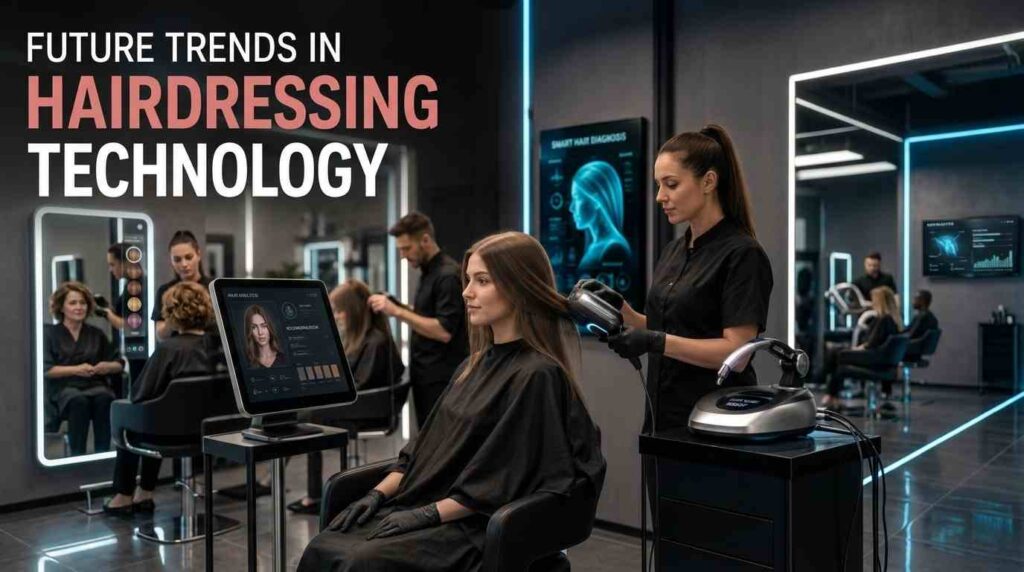
The future of hairdressing technology promises even greater innovation.
Artificial Intelligence Beauty Assistants
Future AI assistants may provide instant recommendations regarding:
- Hairstyles
- Hair colors
- Hair care products
- Treatment plans
These assistants could operate through mobile applications and smart salon systems.
Smart Mirrors
Smart mirrors are expected to become increasingly common in salons.
Potential features include:
- Hairstyle previews
- Product recommendations
- Skin and scalp analysis
- Interactive tutorials
Robotic Hairdressing Systems
Researchers are exploring robotic technologies capable of assisting with:
- Hair cutting
- Hair coloring
- Hair washing
- Styling services
Although still in development, robotics may eventually support hairstylists in performing repetitive tasks.
Sustainable Hairdressing Technology
Environmental sustainability is becoming a priority within the beauty industry.
Future innovations may focus on:
- Energy-efficient equipment
- Water-saving systems
- Eco-friendly products
- Reduced chemical waste
Personalized Hair Care Solutions
Advancements in data analysis may allow professionals to create highly customized hair care plans based on:
- Genetics
- Lifestyle factors
- Environmental conditions
- Individual hair characteristics
Why Hairdressing Technology Is Important
Hairdressing technology has become an essential component of modern salon success. It enhances service quality, improves customer satisfaction, and supports business growth.
Consumers increasingly expect personalized experiences and convenient services. Technology helps salons meet these expectations while improving operational efficiency.
Professionals who embrace innovation can offer more advanced services, differentiate themselves from competitors, and adapt to changing industry trends. As technology continues to evolve, its importance within the beauty sector will only increase.
Final Thoughts
Hairdressing technology has transformed the beauty industry by combining creativity, science, and innovation. Modern salons now have access to advanced tools that improve consultations, styling, coloring, treatments, and business management. These technologies enable professionals to deliver more accurate, efficient, and personalized services while helping clients achieve their desired results with greater confidence.
Looking toward the future, the influence of technology on hairdressing is expected to grow even further. Artificial intelligence, augmented reality, smart mirrors, robotic systems, and sustainable innovations will continue reshaping the salon experience. Businesses that invest in these advancements will be better equipped to meet customer expectations, improve profitability, and remain competitive in an increasingly technology-driven industry.
FAQs about Hairdressing technology
1. What is hairdressing technology?
Hairdressing technology refers to the use of modern tools, software, equipment, and digital systems to improve hair care, styling, coloring, treatments, and salon management.
2. How does artificial intelligence help in hairdressing?
AI helps by analyzing facial features, hair types, and customer preferences to recommend suitable hairstyles and treatments.
3. What are smart hair styling tools?
Smart styling tools include advanced hair dryers, straighteners, and curling devices equipped with sensors and automatic heat-control systems.
4. Why is digital hair analysis important?
Digital analysis identifies scalp and hair conditions accurately, enabling professionals to recommend effective treatments.
5. How does augmented reality improve salon consultations?
AR allows clients to preview hairstyles and colors in real time before making permanent changes.
6. What is salon management software?
Salon management software helps businesses manage appointments, customer records, inventory, payments, and reporting.
7. Are smart styling tools safer for hair?
Yes. Many smart tools use temperature sensors and protective technologies that reduce heat damage.
8. What are the benefits of automated color mixing?
Automated color mixing improves consistency, reduces waste, saves time, and minimizes human error.
9. Can technology improve customer satisfaction?
Yes. Technology enhances personalization, convenience, communication, and service quality, leading to higher customer satisfaction.
10. What challenges come with implementing hairdressing technology?
Common challenges include high costs, staff training requirements, maintenance needs, cybersecurity concerns, and resistance to change.
11. What future technologies may impact hairdressing?
Future innovations include AI beauty assistants, smart mirrors, robotic systems, sustainable technologies, and personalized hair care solutions.
12. Why should salons invest in hairdressing technology?
Salons should invest in technology because it improves efficiency, enhances customer experiences, increases profitability, and helps businesses stay competitive.
Continue Reading
Online Gaming Event Scookievent: Complete Player Guide