
Introduction
Farmers today face a growing challenge: producing more food with limited land, rising input costs, unpredictable weather, and increasing pressure to use resources wisely. Traditional farming methods alone are no longer enough to meet modern agricultural demands. That is why understanding how to improve crop yield with technology has become essential for smarter, more profitable, and more sustainable farming.
From soil sensors and drones to smart irrigation, AI tools, and precision farming systems, technology helps farmers make better decisions at every stage of crop production. This article explains practical ways modern agricultural tools can increase productivity, reduce waste, protect crops, and help farmers get better results from the same land.
What Does Crop Yield Mean?
Crop yield refers to the amount of crop produced from a specific area of land. It is usually measured in kilograms, tons, bushels, or bags per acre or hectare. Higher crop yield means the farmer produces more food, fiber, or raw material from the same land area.
For example, if one acre produces 2 tons of wheat and improved farming methods increase production to 3 tons, the crop yield has improved. This improvement can increase income, food supply, and farm sustainability.
However, improving crop yield does not only mean producing more. A successful farm should also maintain soil health, reduce unnecessary costs, protect crops from diseases, and use water efficiently. Technology helps balance all these goals.
Why Technology Matters in Modern Agriculture
Technology matters because farming conditions are becoming more complex. Climate change, unpredictable rainfall, water shortages, soil degradation, pest attacks, labor shortages, and rising fertilizer costs are major challenges for farmers.
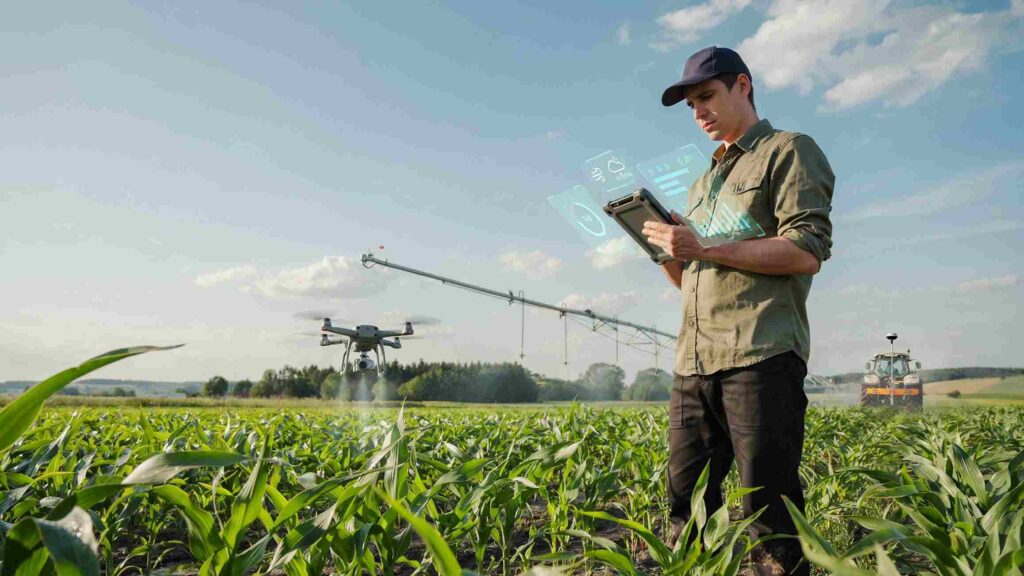
Technology helps solve these problems by giving farmers timely information and practical tools. A farmer can use weather apps to prepare for rainfall, soil sensors to measure moisture, drones to identify weak crop areas, and AI tools to predict disease risks.
The biggest advantage of technology is that it reduces guesswork. When farmers have accurate information, they can make better decisions. This improves crop health, reduces waste, and increases yield potential.
1. Use Soil Testing Technology
Healthy soil is the foundation of high crop yield. If the soil lacks nutrients, has poor structure, or contains harmful salts, crops cannot grow properly. Soil testing technology helps farmers understand what their soil needs before planting.
Modern soil testing can measure important factors such as nitrogen, phosphorus, potassium, pH level, organic matter, moisture, salinity, and micronutrients. These results help farmers choose the right fertilizer plan.
Without soil testing, farmers may apply too much or too little fertilizer. Too much fertilizer wastes money and may damage the soil. Too little fertilizer reduces plant growth. Technology-based soil testing gives a balanced approach.
Farmers can use laboratory soil tests, portable soil testing kits, digital soil sensors, and mobile soil testing services. Once the results are available, they can apply nutrients according to crop requirements.
2. Adopt Precision Agriculture
Precision agriculture is one of the most effective ways to improve crop yield with technology. It means using data, GPS, sensors, maps, and machines to manage fields more accurately.
In traditional farming, the same treatment is often applied to the whole field. But every part of a field is not the same. One area may have more moisture, another may have low fertility, and another may be affected by pests. Precision agriculture helps identify these differences.
With precision farming, farmers can apply water, seeds, fertilizers, and pesticides only where needed. This improves crop growth and reduces waste.
Key tools used in precision agriculture include GPS-guided tractors, field mapping software, variable-rate applicators, soil sensors, yield monitors, drones, and satellite imagery.
This approach is especially useful for large farms, but small farmers can also benefit by using affordable mobile apps, soil testing, and basic mapping tools.
3. Install Smart Irrigation Systems
Water is one of the most important factors in crop production. Too little water causes stress, poor growth, and low yield. Too much water causes root damage, nutrient loss, and disease. Smart irrigation technology helps farmers provide the right amount of water at the right time.
Smart irrigation systems use sensors, weather data, timers, and automation to control water supply. Soil moisture sensors can tell when crops actually need water. Weather-based irrigation systems can reduce watering when rain is expected.
Drip irrigation, sprinkler irrigation, automated pumps, and solar-powered irrigation systems can also improve water efficiency. Drip irrigation is especially useful because it delivers water directly to the roots, reducing evaporation and water waste.
Smart irrigation improves crop yield by keeping plants under less stress. When plants receive proper moisture during important growth stages, they produce better roots, leaves, flowers, and grains.
4. Use Drones for Crop Monitoring
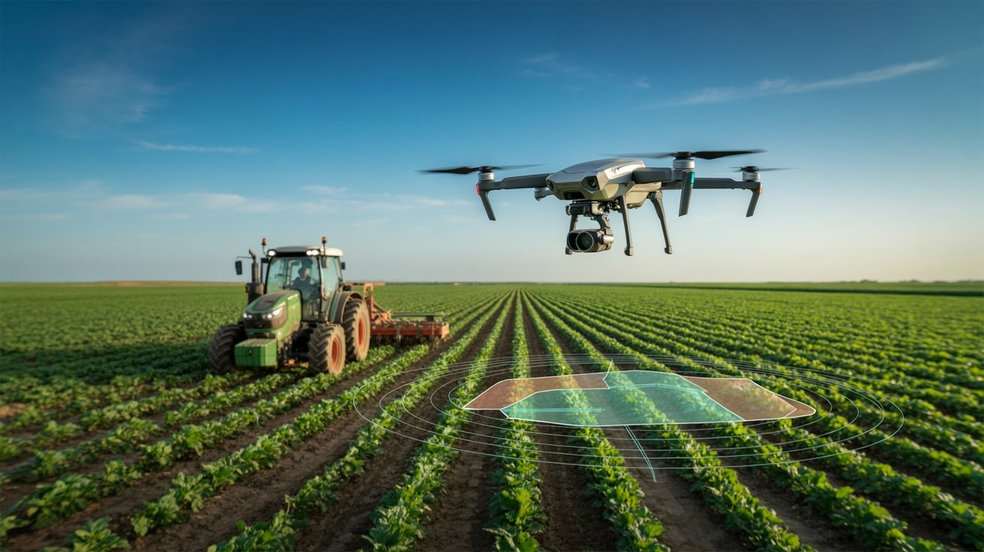
Drones are becoming powerful tools in modern agriculture. They allow farmers to view their fields from above and detect problems that may not be visible from the ground.
Drones can capture images of crop health, plant density, water stress, pest damage, disease spread, and nutrient deficiency. Some drones use special cameras that show differences in plant color and vigor.
With drone monitoring, farmers can identify weak areas early and take action before the problem spreads. For example, if a section of the field shows signs of disease, the farmer can treat only that area instead of spraying the whole field.
Drones can also be used for spraying pesticides, fertilizers, and micronutrients. Drone spraying can save time, reduce labor, and improve coverage in difficult areas.
For best results, drone data should be combined with field inspection. Technology provides information, but farmers should still confirm problems on the ground.
5. Apply Artificial Intelligence in Farming
Artificial intelligence, or AI, helps farmers analyze large amounts of agricultural data. AI tools can study weather patterns, soil conditions, crop images, pest behavior, and market trends to provide useful recommendations.
AI-powered mobile apps can detect plant diseases from photos. A farmer can take a picture of a leaf, upload it to the app, and receive possible disease information along with treatment suggestions.
AI can also help predict crop yield before harvest. This allows farmers and buyers to plan storage, transport, and selling strategies.
In irrigation, AI can recommend when and how much water to apply. In pest management, AI can detect early signs of infestation. AI helps create fertilizer schedules by analyzing soil fertility and crop nutrient needs.
6. Use Weather Forecasting Tools
Weather has a direct impact on crop yield. Rainfall, temperature, humidity, wind, and sunlight affect planting, irrigation, spraying, flowering, and harvesting. Weather forecasting technology helps farmers plan better.
Mobile weather apps, farm advisory platforms, and local weather stations provide daily and weekly forecasts. Farmers can use this information to decide when to irrigate, spray pesticides, apply fertilizer, or harvest crops.
For example, spraying before heavy rain may waste chemicals because rain can wash them away. Harvesting before a storm can prevent crop damage. Irrigating before rainfall may waste water. Weather technology helps avoid these mistakes.
Advanced systems can also warn farmers about frost, heatwaves, drought, and pest-friendly weather conditions. Early warning allows farmers to protect crops before serious damage occurs.
7. Choose High-Quality Seeds with Biotechnology
Seed quality plays a major role in crop yield. Technology has improved seed selection through plant breeding, biotechnology, and genetic research. Modern seeds can offer better germination, disease resistance, drought tolerance, and higher production potential.
Hybrid seeds and improved varieties are developed to perform well under specific conditions. Some varieties are better for dry areas, while others are suitable for irrigated land. Some resist certain diseases or pests.
Farmers should choose seeds according to soil type, climate, water availability, disease history, and market demand. Using certified seeds from reliable sources reduces the risk of poor germination and low yield.
Technology also helps in seed treatment. Treated seeds can be protected from early-stage diseases and insects, giving crops a stronger start.
8. Use Farm Management Software
Farm management software helps farmers organize all farm activities in one place. It can record planting dates, fertilizer applications, irrigation schedules, pesticide use, labor costs, machinery use, and harvest results.
Good records help farmers understand what worked and what did not. For example, if one fertilizer schedule produced better yield than another, the farmer can repeat or improve that strategy next season.
Farm software can also help calculate profit, compare field performance, manage inventory, and track expenses. This is important because higher yield is not enough if production costs are too high.
Some farm management apps are simple and designed for mobile phones. Others are advanced systems for large farms. Farmers should choose software according to their budget, farm size, and technical skills.
9. Improve Pest and Disease Control with Technology
Pests and diseases can destroy crops quickly if they are not controlled early. Technology helps farmers detect, monitor, and manage these threats more effectively.
Digital pest traps, mobile disease detection apps, drones, satellite images, and AI-based alerts can identify problems before they become severe. Early detection reduces crop loss and lowers pesticide costs.
Integrated pest management can also be improved with technology. Farmers can monitor pest populations and spray only when needed. This protects beneficial insects and reduces chemical overuse.
Technology can also help farmers choose the right pesticide, correct dose, and proper application time. Using pesticides carelessly can harm crops, soil, water, and human health. Smart pest control improves both yield and sustainability.
10. Use Satellite Imagery for Field Analysis
Satellite imagery gives farmers a broad view of crop health across large areas. It helps identify differences in plant growth, moisture levels, and stress zones.
Satellite-based tools can show vegetation indexes, which indicate whether plants are healthy or stressed. If a part of the field is weak, the farmer can inspect that area and find the cause.
Satellite imagery is useful for monitoring large farms, but it is also becoming available through affordable digital platforms. Farmers, consultants, and agribusinesses can use this data for planning irrigation, fertilizer, and pest control.
When satellite data is used regularly, farmers can track crop development throughout the season. This helps improve decision-making and yield forecasting.
11. Automate Farm Machinery
Farm automation reduces labor pressure and improves accuracy. Modern tractors, planters, harvesters, and sprayers can use GPS guidance and automation to work more efficiently.
GPS-guided machinery helps reduce overlapping during planting, spraying, and fertilizer application. This saves fuel, seeds, fertilizer, and time. It also ensures more uniform crop growth.
Automated planters can place seeds at the right depth and spacing. Proper spacing helps plants receive enough sunlight, nutrients, and water. This improves crop stand and yield potential.
Automated harvesting equipment can reduce crop losses during harvest. Timely and efficient harvesting is important because delays can reduce quality and quantity.
12. Practice Variable Rate Technology
Variable rate technology allows farmers to apply inputs at different rates across the field. Instead of applying the same amount of fertilizer or seed everywhere, the system adjusts application based on field data.
For example, a fertile area may need less fertilizer, while a weak area may need more. A dry area may need more irrigation, while a moist area may need less. This creates a more balanced crop stand.
Variable rate technology can be used for seeding, fertilization, irrigation, pesticide spraying, and lime application. It requires field maps, sensors, GPS, and compatible equipment.
Although it may require investment, it can improve input efficiency and long-term productivity. Farmers should start with the input that costs them the most, such as fertilizer or water.
13. Use Mobile Apps for Farmer Advisory
Mobile apps are one of the easiest and most affordable technologies for farmers. Many apps provide information about weather, crop diseases, fertilizer schedules, market prices, irrigation, and pest control.
For small farmers, mobile-based advisory services can be very helpful. They provide guidance without requiring expensive equipment. Farmers can receive alerts, watch training videos, consult experts, and track farm activities.
Some apps also connect farmers with buyers, suppliers, and agricultural experts. This improves market access and decision-making.
However, farmers should use trusted apps from reliable agricultural organizations, universities, government departments, or reputable companies. Wrong advice can damage crops and reduce yield.
14. Improve Fertilizer Management with Digital Tools
Fertilizer is one of the biggest costs in crop production. Technology helps farmers use fertilizers more efficiently. Soil testing, crop sensors, satellite images, and nutrient calculators can guide fertilizer decisions.
Digital tools can recommend the right type, amount, and timing of fertilizer. Applying fertilizer at the correct growth stage improves nutrient uptake and crop performance.
Overuse of fertilizer can cause nutrient imbalance, soil problems, and environmental pollution. Underuse can reduce plant growth and yield. Smart fertilizer management creates balance.
Farmers can also use fertigation, where fertilizer is applied through irrigation water. This method improves nutrient delivery and reduces waste, especially in drip irrigation systems.
15. Use Controlled Environment Agriculture
Controlled environment agriculture includes greenhouses, hydroponics, vertical farming, and shade houses. These systems allow farmers to control temperature, humidity, light, water, and nutrients.
In open fields, crops are exposed to weather extremes, pests, and diseases. In controlled environments, farmers can create better growing conditions. This can improve yield, quality, and consistency.
Greenhouses are useful for vegetables, fruits, flowers, and nursery plants. Hydroponics allows crops to grow without soil, using nutrient-rich water. Vertical farming uses stacked layers to produce crops in limited space.
These systems may require higher investment, but they can be profitable for high-value crops and areas with limited land or harsh climate.
16. Reduce Post-Harvest Losses with Technology
Improving crop yield is not only about growing more. Farmers must also protect the harvest after production. Poor storage, handling, transport, and drying can cause major losses.
Technology can reduce post-harvest losses through moisture meters, cold storage, solar dryers, improved packaging, digital weighing systems, and storage monitoring sensors.
For grains, proper drying and moisture control are very important. High moisture can cause fungus, mold, and quality loss. Moisture meters help farmers know when the crop is safe for storage.
Cold storage helps preserve fruits, vegetables, and flowers. Better storage means farmers can sell at the right time instead of selling immediately at low prices.
17. Train Farmers to Use Technology Correctly
Technology only improves crop yield when farmers know how to use it correctly. Training is essential. Farmers need to understand how to read data, maintain equipment, follow recommendations, and make practical decisions.
Training can be provided through extension workers, agricultural universities, online courses, mobile videos, farmer groups, and demonstration farms.
Farmers should start with simple technologies first. For example, soil testing, weather apps, improved seeds, and drip irrigation may be easier to adopt than advanced robotics or AI systems.
Step-by-step adoption is better than buying expensive tools without understanding them. The goal is not to use technology for show. The goal is to solve real farm problems.
18. Make Technology Affordable and Practical
One major challenge is cost. Many farmers, especially small farmers, cannot afford expensive drones, sensors, or automated machinery. However, technology does not always have to be expensive.
Farmers can begin with low-cost solutions such as mobile apps, soil testing, improved seeds, weather alerts, basic drip irrigation, and shared machinery services.
Cooperatives and farmer groups can also share technology. For example, one drone service provider can serve many farms. Custom hiring centers can provide tractors, planters, harvesters, and sprayers on rent.
Governments, NGOs, and agribusiness companies can support farmers through subsidies, training, financing, and advisory services. Technology should be accessible, not limited to large farms only.
19. Combine Traditional Knowledge with Modern Tools
Farmer experience is still very important. Technology should support traditional knowledge, not replace it completely. Local farmers understand soil behavior, crop history, weather patterns, and regional challenges.
The best farming decisions come from combining experience with data. For example, if a weather app predicts rain but the farmer knows local wind patterns suggest otherwise, both sources of information should be considered.
Technology gives measurements, alerts, and predictions. Farmers provide judgment, context, and practical understanding. Together, they can improve crop yield more effectively.
20. Build a Step-by-Step Technology Plan
Farmers should not adopt every technology at once. A practical plan is important. The first step is to identify the biggest problem affecting yield.
Small improvements can create big results over time. Better seed selection, proper irrigation, timely pest control, and accurate fertilizer use can significantly improve yield when done consistently.
Common Mistakes to Avoid
Many farmers buy technology without understanding their actual needs. This can waste money. Technology should solve a specific problem.
Another mistake is ignoring data. If sensors or apps provide information but the farmer does not act on it, the technology becomes useless.
Poor maintenance is also a problem. Sensors, drones, pumps, and machines need regular care. Broken or inaccurate equipment can lead to wrong decisions.
Farmers should also avoid depending only on one tool. Crop yield depends on many factors, so technology should be part of a complete farm management system.
Final Thoughts
Technology is changing the future of farming by helping farmers make smarter, faster, and more accurate decisions. From soil testing and smart irrigation to drones, AI, satellite imagery, and farm management software, each tool plays an important role in showing how to improve crop yield with technology in a practical way. When used correctly, these technologies can reduce waste, protect crops, save resources, and increase crop yield more sustainably.
However, technology works best when it is practical, affordable, and combined with farmer experience. Farmers should start with the tools that solve their biggest problems first, whether that is water management, soil health, pest control, or better planning. By adopting technology step by step and using data wisely, farmers can lower costs, improve productivity, and build a stronger future for agriculture.
FAQs
1. What is the best way to improve crop yield with technology?
The best way is to start with the farm’s biggest problem. Soil testing, smart irrigation, drones, and weather apps can help farmers make better decisions and increase production.
2. How does technology help farmers increase crop yield?
Technology helps farmers monitor soil, water, weather, pests, and crop health more accurately. This reduces guesswork, saves resources, and improves crop growth.
3. Why is soil testing important for crop yield?
Soil testing shows which nutrients the soil needs. It helps farmers apply the right fertilizer amount, improve soil health, and support stronger crop growth.
4. What is precision agriculture?
Precision agriculture uses data, GPS, sensors, drones, and maps to manage fields more accurately. It helps farmers apply water, fertilizer, and pesticides only where needed.
5. How does smart irrigation improve crop production?
Smart irrigation gives crops the right amount of water at the right time. It reduces water waste, prevents crop stress, and supports better yield.
6. How do drones help farmers?
Drones help farmers monitor fields from above. They can detect crop stress, pest damage, disease spread, water problems, and weak areas early.
7. Can AI help improve crop yield?
Yes, AI can help farmers detect diseases, predict yield, plan irrigation, monitor pests, and suggest fertilizer schedules based on crop and soil data.
8. Why are weather forecasting tools useful in farming?
Weather tools help farmers plan irrigation, spraying, fertilization, planting, and harvesting. They also help reduce damage from rain, drought, frost, and heatwaves.
9. How do high-quality seeds increase yield?
High-quality seeds offer better germination, stronger growth, disease resistance, and higher production potential. Choosing the right seed variety improves crop performance.
10. What is farm management software?
Farm management software helps farmers record planting, irrigation, fertilizer use, pesticide application, costs, and harvest results. It improves planning and decision-making.
11. How does technology help control pests and diseases?
Technology helps detect pests and diseases early through drones, mobile apps, digital traps, and AI alerts. Early action reduces crop loss and pesticide waste.
12. Is satellite imagery useful for farmers?
Yes, satellite imagery helps farmers monitor crop health, moisture levels, and weak field areas. It supports better decisions for irrigation, fertilizer, and pest control.
13. Can small farmers use agricultural technology?
Yes, small farmers can use affordable tools like mobile apps, soil testing, weather alerts, improved seeds, and basic drip irrigation to improve crop yield.
14. How does technology reduce fertilizer waste?
Technology uses soil tests, crop sensors, and nutrient calculators to recommend the right fertilizer amount. This saves money and protects soil health.
15. Should technology replace farmer experience?
No, technology should support farmer experience, not replace it. The best results come when farmers combine local knowledge with modern farming tools.
Continue Reading
Technology Development Program Associate – August 2026 Success Guide
Professional Strategies to Use a SpaceProxy Coupon Efficiently