
Introduction
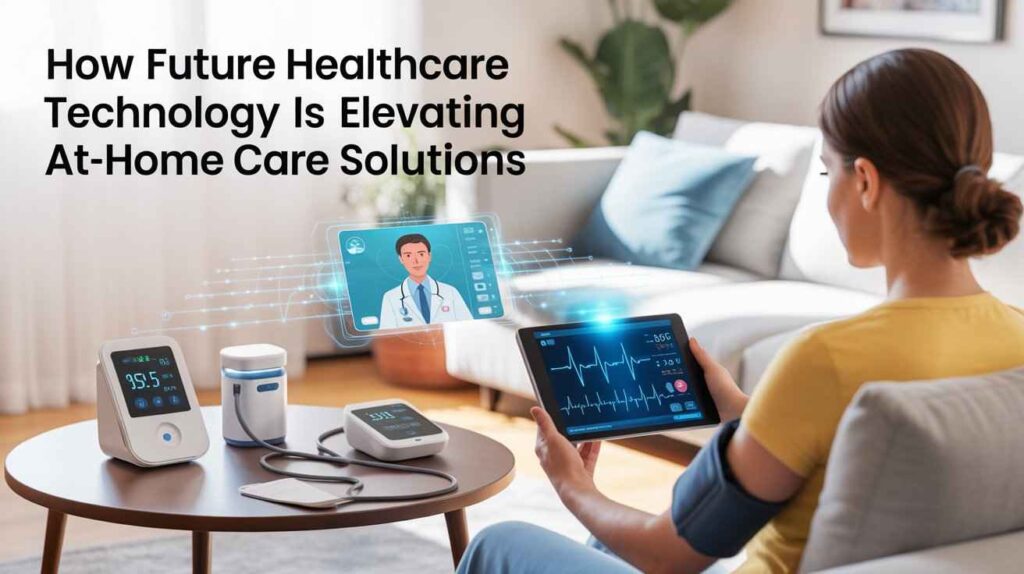
The healthcare industry has witnessed monumental changes in recent years, largely due to advancements in technology. One of the most significant changes is the rise of at-home care, made possible by cutting-edge innovations that enable patients to receive high-quality medical attention within the comfort of their own homes. How future healthcare technology is elevating at-home care is now a central point of focus, as digital health solutions, telemedicine, wearable devices, and AI tools increasingly redefine what is possible for home healthcare. With healthcare costs rising and more patients seeking the convenience of home-based care, technology has become a vital ally in making these services not only affordable but also sustainable and efficient.
We will explore how emerging technologies are transforming at-home healthcare, making it more convenient and improving patient outcomes. We’ll dive into the latest innovations, such as telemedicine, wearables, artificial intelligence (AI), robotics, and data security measures, all playing a key role in enhancing the quality of care delivered at home.
The Rise of Telemedicine and Virtual Health Services
Telemedicine has rapidly become one of the most transformative technologies in healthcare, particularly in the context of at-home care. Telemedicine refers to the remote diagnosis and treatment of patients through telecommunications technology, enabling individuals to consult with healthcare providers without needing to travel to a clinic or hospital. This shift is especially beneficial for individuals with chronic conditions or those in need of frequent consultations. How future healthcare technology is elevating at-home care is directly linked to the convenience and accessibility that telemedicine offers.
Patients now can schedule virtual consultations with doctors, specialists, and therapists from the comfort of their homes. This service has been further enhanced by the integration of artificial intelligence (AI), which can assist in diagnosing conditions through data analysis and algorithmic decision-making. Additionally, telemedicine allows healthcare providers to monitor the condition of patients in real-time, receiving data from wearable health devices and ensuring a continuous flow of information without in-person visits.
Telemedicine is also instrumental in reaching underserved populations, including those living in rural or remote areas, where access to healthcare facilities might be limited. With a virtual consultation, the need to travel long distances is eliminated, enabling patients to receive timely care. This has been especially crucial during the COVID-19 pandemic, when in-person consultations became a challenge.
The Role of Wearable Health Devices
Wearable health devices are becoming an integral part of at-home healthcare, providing continuous, real-time data on a patient’s health. From fitness trackers to advanced health monitoring devices like smartwatches, glucose monitors, and ECG monitors, wearables are revolutionizing how future healthcare technology is elevating at-home care. These devices collect valuable health metrics—such as heart rate, blood pressure, blood oxygen levels, and activity levels—and transmit this data to healthcare professionals for analysis.
One of the key advantages of wearable devices is the ability to monitor patients 24/7, allowing healthcare providers to track health metrics remotely and intervene if necessary. For instance, smartwatches can alert healthcare providers if a patient’s heart rate or blood oxygen levels reach dangerous thresholds, enabling timely interventions. This technology is especially beneficial for patients with chronic conditions like diabetes, cardiovascular disease, or respiratory illnesses, as it allows for proactive care.
The information gathered from wearable devices can also help tailor individualized treatment plans. By continuously monitoring a patient’s health, doctors can make data-driven decisions about medication adjustments, exercise routines, and lifestyle changes. This personalized care approach is a significant advancement over traditional, static treatment plans, enhancing patient outcomes and reducing hospital readmissions.
Artificial Intelligence and Machine Learning in At-Home Care
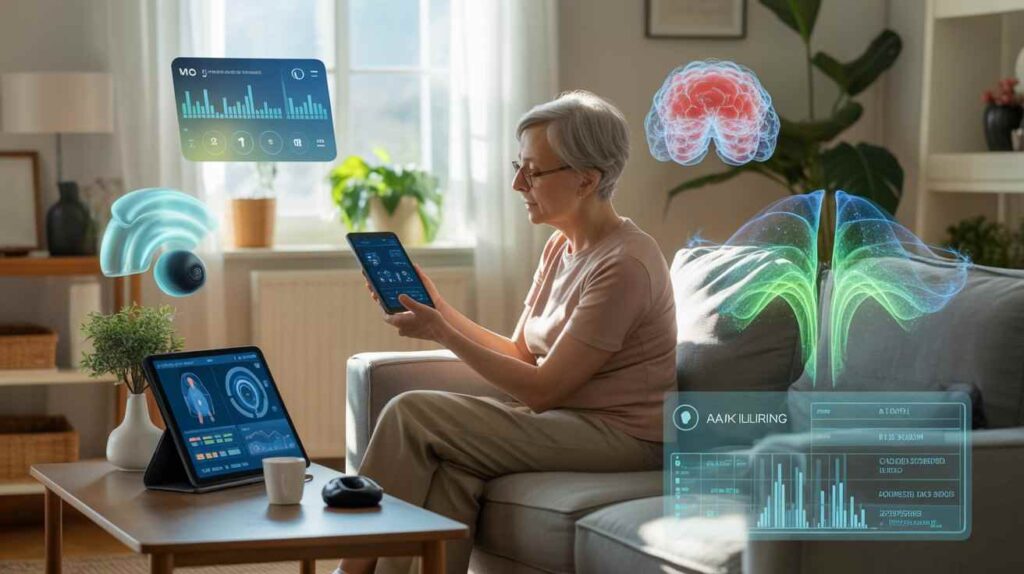
Artificial intelligence (AI) and machine learning (ML) have the potential to completely transform how future healthcare technology is elevating at-home care. These technologies are revolutionizing patient care by providing insights that were once impossible to obtain, making care more personalized, accurate, and efficient.
AI algorithms can process vast amounts of data from various sources, such as wearable devices, electronic health records, and patient-reported outcomes, to identify patterns and predict health trends. For example, AI-powered diagnostic tools can analyze symptoms reported by patients and provide early warnings about potential health issues, such as heart attacks or strokes. These predictions can be sent to healthcare providers, who can take preventive measures before the condition becomes critical.
Machine learning can also be applied to medication management. AI-driven apps and systems can track a patient’s medication schedule and send reminders to ensure timely adherence. Moreover, AI can analyze data to detect any potential drug interactions, side effects, or complications, ensuring that patients receive the most effective treatment with minimal risk.
In addition, AI can streamline administrative tasks such as scheduling, patient triage, and data entry, freeing up healthcare providers to focus more on direct patient care. With these advancements, AI and ML are playing a crucial role in elevating at-home healthcare to a new level of efficiency and precision.
Remote Monitoring and Virtual Health Assistants
Remote monitoring is another crucial technology in how future healthcare technology is elevating at-home care. It involves the continuous collection and analysis of a patient’s health data, enabling healthcare providers to monitor their conditions without the need for frequent in-person visits. This is made possible by a variety of connected devices, such as sensors, smartwatches, blood pressure monitors, and glucose meters, which continuously collect and send data to medical professionals.
One of the most exciting aspects of remote monitoring is that it enables a more personalized approach to care. With real-time health data, healthcare providers can adjust treatment plans as needed, offering more accurate and responsive care. For example, if a patient’s blood sugar levels are unstable, their doctor can adjust their insulin regimen in real-time without the patient needing to visit the clinic.
In addition to remote monitoring, virtual health assistants are enhancing at-home care by providing constant support to patients. These AI-powered assistants can remind patients to take their medication, follow specific exercise routines, or track symptoms. Virtual assistants can also offer emotional support, reducing feelings of loneliness and isolation, especially among elderly patients. By making healthcare more accessible and providing ongoing support, virtual assistants are becoming indispensable in at-home care.
Robotics in At-Home Care
Robotics is emerging as a powerful tool in how future healthcare technology is elevating at-home care. While robots have traditionally been used in hospital settings for surgeries and logistics, recent advancements have made them suitable for home healthcare applications. Robotics can assist with a wide range of tasks, from mobility support to medication management and even providing companionship.
For example, robotic exoskeletons can help patients with mobility issues regain their independence, allowing them to walk or perform basic tasks that would otherwise be difficult. Meanwhile, robots designed for medication management can ensure patients take the correct medication at the right time, reducing human error and promoting adherence.
Robots are also being developed to assist with rehabilitation. Robotic devices that guide patients through physical therapy exercises are helping individuals recover from injuries or surgeries more efficiently. These robots can track progress, adjust exercise regimens based on real-time data, and provide feedback, enabling patients to recover faster in the comfort of their own homes.
Data Security and Privacy Concerns in At-Home Healthcare
With the proliferation of digital health technologies, how future healthcare technology is elevating at-home care also raises important concerns about data security and privacy. The vast amounts of sensitive patient data being collected and transmitted remotely must be protected from cyber threats and unauthorized access. Data breaches could compromise patient privacy and erode trust in these technologies.
To address these concerns, healthcare providers must implement robust security measures, including encryption, secure data transmission, and strict access controls. Additionally, healthcare organizations must comply with privacy regulations such as the Health Insurance Portability and Accountability Act (HIPAA) in the United States and the General Data Protection Regulation (GDPR) in Europe to ensure that patient data is handled with the utmost care.
Patients should also be educated about the potential risks and benefits of using these technologies, ensuring that they are aware of how their data will be used and stored. As healthcare technology continues to advance, it is essential that cybersecurity and privacy remain top priorities.
Final Thoughts
The future of healthcare is undeniably shaped by technology, with how future healthcare technology is elevating at-home care standing as one of its most promising transformations. These technological advancements have enabled the healthcare system to become more patient-centric, personalized, and accessible. From telemedicine and wearables to AI-powered diagnostics and robotic assistants, at-home care is no longer limited to basic services. Instead, patients can receive comprehensive, real-time care that is tailored to their unique needs.
The evolution of home healthcare also presents new opportunities for reducing healthcare costs, improving patient outcomes, and empowering individuals to take control of their health. By bringing healthcare into the home, we can eliminate barriers to care, reduce hospital readmissions, and enhance the overall patient experience. As these technologies continue to evolve, the potential for even more groundbreaking innovations in at-home care is endless.
However, the integration of these technologies into everyday healthcare practices requires careful consideration of data security, patient privacy, and regulatory compliance. As the healthcare industry adapts to this digital shift, it is essential to balance technological progress with the protection of sensitive information. Only through responsible and ethical implementation will we realize the full potential of these technologies in enhancing at-home care.
FAQs:
1. What is telemedicine, and how is it changing at-home care?
Telemedicine involves the use of telecommunications technology to provide remote diagnosis and treatment. It allows patients to consult with healthcare providers from their homes, which is particularly beneficial for those with chronic conditions or regular medical needs. It eliminates travel, improves accessibility, and makes healthcare more timely and convenient.
2. How do wearable health devices benefit at-home healthcare?
Wearable devices, such as smartwatches and fitness trackers, monitor vital signs like heart rate, blood pressure, and oxygen levels in real time. These devices allow healthcare providers to remotely track a patient’s health and intervene if necessary, offering continuous and personalized care.
3. What role does artificial intelligence (AI) play in at-home care?
AI enhances at-home healthcare by analyzing large amounts of patient data to detect patterns, predict health trends, and provide diagnostic assistance. AI can manage medications, monitor symptoms, and make recommendations, improving the overall accuracy and efficiency of healthcare delivery.
4. What is remote monitoring in healthcare?
Remote monitoring refers to the continuous collection of health data through connected devices such as sensors and wearables. It allows healthcare providers to track patients’ conditions remotely, ensuring real-time adjustments to treatment plans without the need for in-person visits.
5. How do virtual health assistants contribute to at-home care?
Virtual health assistants, powered by AI, help patients manage their health by reminding them to take medications, track symptoms, and follow prescribed routines. These assistants also offer emotional support, particularly for elderly patients, reducing isolation and improving the overall patient experience.
6. Can robotics assist in at-home healthcare?
Yes, robotics is becoming an essential tool in at-home healthcare. Robots can help patients with mobility issues, manage medications, and even assist in rehabilitation exercises. Designers create robotic exoskeletons and therapy devices to aid recovery, mobility, and improve daily living for patients.
7. What are the data security concerns with at-home healthcare technology?
With the increased use of digital health tools, the security of patient data is a primary concern. Cybersecurity measures, including encryption and secure data transmission, are necessary to protect sensitive health information. Compliance with regulations like HIPAA and GDPR ensures that patient data remains secure and confidential.
8. How does AI help in managing chronic conditions at home?
AI algorithms analyze data from wearables and patient reports to detect early signs of health issues. For patients with chronic conditions like diabetes or heart disease, AI can suggest adjustments to their treatment plans, track medication adherence, and predict potential complications, leading to better disease management.
9. How do wearable devices help prevent health emergencies?
Wearables continuously monitor vital signs such as heart rate, blood pressure, and blood oxygen levels. If any readings fall outside safe parameters, the device alerts both the patient and healthcare provider, enabling early intervention and preventing potential health emergencies.
10. What are the benefits of AI-powered diagnostic tools in at-home care?
AI-powered diagnostic tools assist healthcare providers in analyzing symptoms and predicting potential health issues. By processing data from various sources, these tools provide timely warnings and actionable insights, allowing healthcare professionals to intervene early and prevent the progression of diseases.
11. How does remote monitoring improve personalized care for patients?
Remote monitoring allows healthcare providers to continuously track a patient’s health metrics and adjust treatment plans as necessary. By using real-time data, doctors can make data-driven decisions about medications, exercise, and lifestyle changes, providing more personalized care than traditional methods.
12. How can robotics help with rehabilitation at home?
Robotics can assist with rehabilitation by guiding patients through physical therapy exercises. These robotic devices track progress, adjust regimens, and provide feedback in real-time, enabling faster recovery from injuries or surgeries in the comfort of a patient’s home.
13. What privacy regulations govern at-home healthcare technology?
Healthcare technologies must comply with privacy regulations such as HIPAA (Health Insurance Portability and Accountability Act) in the United States and GDPR (General Data Protection Regulation) in Europe. These regulations guarantee that healthcare providers handle patient data securely and maintain its confidentiality.
14. Are virtual health assistants beneficial for elderly care?
Yes, virtual health assistants are particularly beneficial for elderly care. They can provide medication reminders, track daily health activities, and offer emotional support. By reducing feelings of loneliness and providing consistent care, these assistants enhance the overall well-being of elderly patients.
15. How is AI improving medication management at home?
AI helps manage medications by tracking schedules and reminding patients to take their medications on time. It can also analyze data for potential drug interactions, side effects, and complications, ensuring that patients adhere to their prescribed treatment plans effectively.
16. What technological advancements will shape the future of at-home care?
In the future, AI, robotics, and telemedicine will become even more integrated into at-home care as advancements occur. We may see more intelligent wearables that monitor a wider range of health metrics, advanced robotic assistants for tasks like mobility support, and AI-driven platforms that predict health issues before they occur.
17. What are the main challenges in adopting at-home healthcare technology?
Some of the main challenges include ensuring data security, maintaining patient privacy, overcoming technological literacy barriers among older adults, and ensuring that these technologies are affordable and accessible to all demographics, especially underserved populations.
ALSO READ
How to Future Proof Your Business for Success
Checklist for a Technology Audit in K12 Michigan: Essential Steps
Wallapix 2026: Create Stunning Digital Products From Photos