
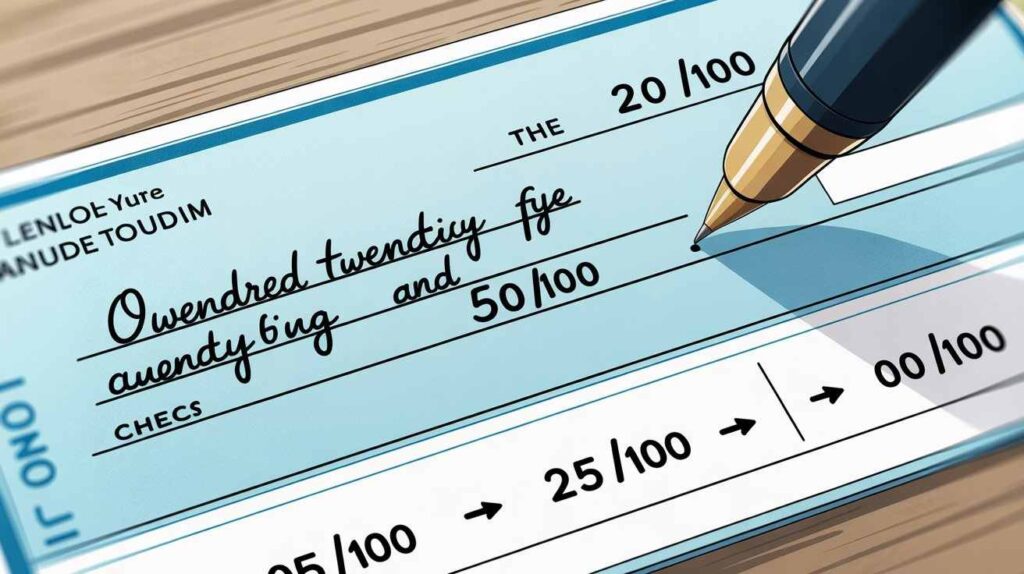
Writing a check may seem old-fashioned in today’s digital world, but it remains an important financial skill. Whether you are paying rent, settling a bill, or making a donation, knowing how to write cents on a check correctly ensures your payment is processed without errors or delays. Even a small mistake in writing cents can cause confusion, bank rejection, or even disputes. That’s why understanding the proper format, placement, and common rules is essential.
Checks are legal financial documents. Every detail matters, especially the amount section. When you include cents, you must write them clearly and accurately in both numeric and word format. Many people get confused about whether to write cents as a fraction, in words, or in decimal form. In this comprehensive guide, you will learn everything you need to know about writing cents on a check properly, confidently, and correctly.
Understanding the Structure of a Check
Before learning how to write cents properly, it is important to understand the basic parts of a check. A standard check contains:
- Date line
- Payee line (“Pay to the Order of”)
- Dollar amount box (numeric form)
- Dollar amount line (written in words)
- Memo line
- Signature line
The cents must appear in both the numeric box and the written amount line. The numeric box uses a decimal format, while the written line uses a fractional format for cents.
For example:
- Numeric box: $125.75
- Written line: One hundred twenty-five and 75/100
This dual format protects against fraud and ensures clarity.
Why Writing Cents Correctly Matters
Banks process millions of checks every day. They rely on consistency and accuracy. When cents are written incorrectly:
- The bank may return the check unpaid.
- The amount may be interpreted incorrectly.
- Processing may be delayed.
- You may face additional bank fees.
The written amount line is especially important because if there is a difference between the numeric box and the written words, banks usually honor the written amount. This means if you write “One hundred twenty-five and 75/100” but the box says $125.57, the bank may process it as $125.75.
Accuracy is not just about professionalism—it protects your money.
Step-by-Step Guide: How to Write Cents on a Check
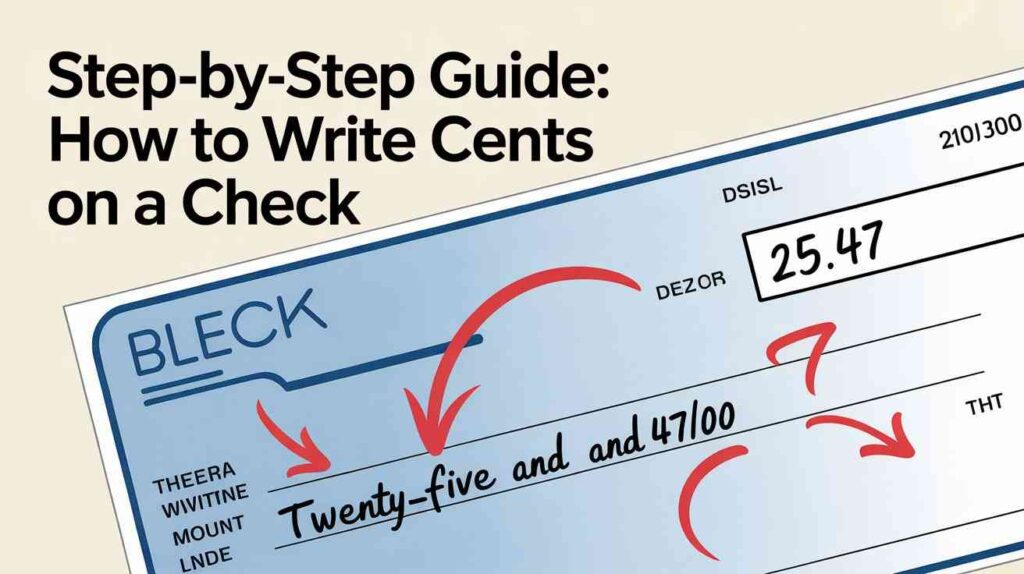
Let’s break it down clearly.
Step 1: Write the Dollar Amount in Numbers
In the small box on the right side of the check, write the total amount using numbers and a decimal point.
Example:
$250.40
The decimal separates dollars from cents. Always include two digits after the decimal point. If there are no cents, write .00.
Correct examples:
- $100.00
- $45.09
- $89.50
Incorrect examples:
- $100
- $45.9
- $89.5
Two digits are always required for cents.
Step 2: Write the Dollar Amount in Words
On the long line below “Pay to the Order of,” you must write the amount in words.
For the dollar portion, spell it out completely.
Example:
- $250.40 becomes: Two hundred fifty and 40/100
Please note that the cents are expressed as a fraction of 100. This is because cents represent a portion of one dollar.
Step 3: Use And Correctly
The word “and” separates dollars from cents.
Correct format:
Two hundred fifty and 40/100
The word “and” should not be used within the dollar portion itself.
Incorrect:
Two hundred and fifty and 40/100
Correct:
Two hundred fifty and 40/100
In American check-writing conventions, and is reserved for the cents.
Writing Cents as a Fraction
The most common and accepted method for writing cents is as a fraction over 100.
Examples:
- $10.25 → Ten and 25/100
- $89.03 → Eighty-nine and 03/100
- $150.99 → One hundred fifty and 99/100
Even if the cents are less than 10, always include a leading zero.
Example:
- $45.05 → Forty-five and 05/100
Never write:
- Forty-five and 5/100
Always write:
- Forty-five and 05/100
The zero ensures clarity and prevents fraud.
What If There Are No Cents?
If the check has no cents, write:
- $100.00 in numeric box
- One hundred and 00/100 on written line
Some people write “Only” after the amount:
One hundred and 00/100 Only
Adding “Only” helps prevent someone from adding extra numbers later.
Common Mistakes to Avoid
Many people make small but costly mistakes when writing cents on checks. Here are the most common ones:
1. Forgetting the Decimal
Writing $1005 instead of $100.05 can cause major issues.
2. Writing Cents in Words Instead of Fraction
Avoid:
One hundred and forty cents
Instead write:
One hundred and 40/100
3. Leaving Space After Writing the Amount
Always draw a line to the end of the written amount line to prevent tampering.
Example:
One hundred twenty-five and 75/100 ———
4. Inconsistent Amounts
The numeric box and written line must match exactly.
Examples for Different Amounts
Let’s look at multiple scenarios.
$5.01
Five and 01/100
$19.99
Nineteen and 99/100
$1000.10
One thousand and 10/100
$2,345.67
Two thousand three hundred forty-five and 67/100
$0.75
Zero and 75/100
Even if there are zero dollars, you must write “Zero” in the dollar section.
Special Situations
Writing a Check Under One Dollar
If the amount is 75 cents:
Numeric: $0.75
Written: Zero and 75/100
Writing a Large Check
For large payments, clarity becomes even more important.
$12,500.08
Twelve thousand five hundred and 08/100
Double-check spelling and numbers.
Security Tips When Writing Cents
Financial fraud is a real concern. Here’s how to protect yourself:
- Use permanent ink (blue or black).
- Do not leave blank spaces.
- Draw a line after the written amount.
- Always include two digits for cents.
- Avoid correction fluid; rewrite the check if needed.
Accuracy reduces risk.
Why Banks Prefer Fraction Format
You may wonder why cents are written as 75/100 instead of “seventy-five cents.” The fraction format:
- Is standardized.
- Reduces misinterpretation.
- It is easier for automated processing.
- Prevents alterations.
Financial institutions rely on uniform formatting to ensure smooth operations.
Business Checks vs Personal Checks
The rules for writing cents remain the same whether the check is personal or business. However, businesses are often more strict about formatting because:
- Checks may be processed in bulk.
- Accounting systems rely on precision.
- Auditing requires consistency.
Businesses often add “Only” and draw a strong line after the amount.
Legal Importance of the Written Amount
Legally, if the numeric box and written line differ, banks typically honor the written amount. That means the written words override the numbers.
Example:
Box: $150.00
Written: One hundred fifteen and 00/100
The bank may process $115.00.
This makes learning how to write cents on a check correctly even more critical.
Modern Relevance of Check Writing
Even in the era of online payments and digital banking, checks are still used for:
- Rent payments
- Government transactions
- Legal settlements
- Business contracts
- School fees
Many institutions still require checks, especially for large or formal payments.
Knowing this skill ensures financial independence and responsibility.
Practice Section
Try converting these amounts:
- $67.45
- $800.09
- $1,250.00
- $3.07
- $9,999.99
Correct Answers:
- Sixty-seven and 45/100
- Eight hundred and 09/100
- One thousand two hundred fifty and 00/100
- Three and 07/100
- Nine thousand nine hundred ninety-nine and 99/100
Practice builds confidence.
Final Thoughts
Writing checks may feel like a small financial task, but it carries significant importance. A single error in writing cents can delay payments, cause confusion, or even result in financial loss. Understanding how to structure the numeric and written sections properly ensures your checks are accurate, secure, and professional. When you take the time to write cents correctly using the fractional format, you protect yourself from unnecessary complications.
Learning how to write cents on a check is a simple yet essential life skill. It reflects financial responsibility and attention to detail. Even as digital payments continue to grow, checks remain a trusted method of transaction in many formal and legal situations. Mastering this skill means you can handle both personal and business financial matters with confidence and clarity.
FAQs about how to write cents on a check
1. How do you write cents on a check correctly?
To write cents correctly, include them in both the numeric box and the written amount line. In the numeric box, use a decimal format (e.g., $125.75). On the written line, write the dollar amount in words and the cents as a fraction over 100 (e.g., One hundred twenty-five and 75/100).
2. Why are cents written as a fraction on a check?
Cents are written as a fraction (such as 75/100) because it is a standardized banking format. This method reduces misinterpretation, supports automated processing, and prevents alterations or fraud.
3. What happens if the numeric amount and written amount do not match?
If there is a difference between the numeric amount and the written amount, banks typically honor the written amount. That is why it is critical to ensure both sections match exactly.
4. Should cents be written in words or numbers?
Cents should not be written in words like “forty cents.” Instead, they should be written as a fraction over 100 (for example, 40/100). This is the accepted banking standard.
5. How do you write a check with no cents?
If there are no cents, write .00 in the numeric box and 00/100 in the written line. For example:
$100.00
One hundred and 00/100
You may also add “Only” at the end for added security.
6. How do you write a check for less than one dollar?
If the amount is less than one dollar, such as 75 cents, write:
$0.75 in the numeric box
Zero and 75/100 on the written line
Even if there are no whole dollars, you must write “Zero” in the dollar portion.
7. Do you always need two digits for cents?
Yes. Always include two digits after the decimal point in the numeric box. For example:
$45.05 (correct)
$45.5 (incorrect)
The same applies to the fraction format—use 05/100 instead of 5/100.
8. Where does the word “and” go when writing a check?
The word “and” separates dollars from cents. It should not appear within the dollar portion. For example:
Correct: Two hundred fifty and 40/100
Incorrect: Two hundred and fifty and 40/100
9. Why is writing cents accurately important?
Writing cents accurately prevents processing delays, bank rejection, financial disputes, and possible fees. It also protects against fraud and ensures the correct amount is withdrawn from your account.
10. Can I correct a mistake if I write cents incorrectly?
It is best not to use correction fluid or scratch out errors. If you make a mistake while writing cents, avoid the check and write a new one to avoid complications.
11. Is the rule for writing cents different for business checks?
No, the rules are the same for both personal and business checks. However, businesses may follow stricter formatting standards for accounting and auditing purposes.
12. Why do banks prefer the fraction format for cents?
Banks prefer the fraction format because it is consistent, reduces confusion, and is easier for automated systems to read and verify. It also prevents someone from altering the amount easily.
13. Should I add a line after writing the amount?
Yes. Drawing a line after the written amount helps prevent anyone from adding extra numbers or words to change the value of the check.
14. What ink should I use when writing a check?
Use blue or black permanent ink. This reduces the risk of tampering and ensures the information is clearly readable by bank systems.
15. What is the safest way to ensure my check is processed correctly?
Double-check that:
- The numeric and written amounts match.
- Two digits are used for cents.
- Cents are written as a fraction over 100.
- No blank spaces are left on the written line.
- The check is signed properly.
Following these steps ensures your check is accurate, secure, and professionally completed.
ALSO READ
State Wide Area Network: Secure State Connectivity