

Introduction
Starting a business in Wisconsin is an exciting opportunity, but before you can officially begin operations, one of the key steps is securing a Wisconsin business license. Whether you are opening a restaurant, a retail shop, or launching an online service, understanding the process of acquiring a business license in Wisconsin is critical to ensure compliance with state and local regulations.
A Wisconsin business license serves as your official permission to operate a business in the state. However, it’s not a one-size-fits-all situation—depending on your business type and location, you may need different licenses or permits. This article will guide you through the essential steps of obtaining a Wisconsin business license, from understanding the types of licenses required to navigating the application process. Additionally, we’ll cover the costs involved, common mistakes to avoid, and how to stay compliant with the regulations in Wisconsin.
What is a Wisconsin Business License?
A Wisconsin business license is a legal authorization required to operate a business in the state. It’s a way for state and local governments to regulate various industries and ensure that businesses comply with safety, zoning, tax, and other regulations. While many businesses require licenses or permits, not all businesses need a specific Wisconsin business license, as some may only need certain specialized permits, such as a sales tax permit or professional license.
The types of business licenses in Wisconsin can vary depending on your business’s activities, whether you are selling goods or services, or whether you operate within a regulated industry. These licenses ensure that businesses meet necessary health, safety, and legal standards.
Types of Business Licenses in Wisconsin
Depending on the type of business you operate, Wisconsin requires various licenses and permits. Generally, you’ll be required to secure both state-level and local-level licenses, although some businesses may only need one or the other.
1. State Business License
Not all businesses in Wisconsin are required to obtain a state business license. However, certain industries require specific permits from state agencies. These licenses are issued by state departments such as the Department of Revenue, Department of Safety and Professional Services, and Department of Agriculture, Trade and Consumer Protection.
Some common state business licenses in Wisconsin include:
- Liquor License – Required for businesses involved in the sale of alcoholic beverages.
- Sales Tax Permit – For businesses that sell tangible goods or services that are taxable.
- Professional Licenses – For certain occupations, including doctors, lawyers, accountants, and real estate agents.
- Health & Safety Licenses – For businesses in health-related sectors, such as food establishments and medical practitioners.
2. Local Business Licenses
In addition to state-level requirements, most businesses will also need to obtain a local business license from their city or county government. These licenses often vary by municipality, and may include the following:
- Zoning Permits – To confirm that your business is operating in a designated commercial area.
- Health Department Permits – If your business involves food service or health-related services, you may need to obtain permits from the local health department.
- Food Vendor License – Required for any business selling food.
- Signage Permits – If you plan to put up a sign on your business premises, you may need to secure a permit from the local government.
- Building Permits – If you are renovating or constructing a building for your business, local zoning and building permits are required.
3. Specialized Industry Licenses
For certain specialized industries, additional permits or licenses may be required. These could include:
- Contractor Licenses – For construction and contracting businesses.
- Agriculture Permits – For businesses in agriculture or farming, including pesticide application or livestock management.
- Transportation Permits – For businesses that operate vehicles for transportation, such as motor carriers or trucking companies.
Who Needs a Business License in Wisconsin?
While some businesses in Wisconsin may not require a business license, most will. Common industries that require licenses or permits include:
- Retail businesses – Whether brick-and-mortar or online, most retail businesses need a Wisconsin business license to sell products.
- Restaurants and food service businesses – These businesses typically require food handling, health, and safety permits.
- Health-related businesses – Medical professionals and clinics require licenses issued by the Department of Safety and Professional Services.
- Contractors and tradespeople – If your business involves construction or providing a trade service (e.g., plumbing or electrical work), you will need the appropriate licenses.
Each business type will have specific requirements, so it’s important to determine which licenses you need based on the nature of your business.
How to Apply for a Wisconsin Business License
Obtaining a Wisconsin business license is a straightforward process, but it can vary based on the type of business you are starting. Here’s a general step-by-step process:
1. Register Your Business Name
Before you apply for any business license, ensure that your business name is registered with the Wisconsin Department of Financial Institutions (DFI) if you are using a name other than your personal name. This step is crucial to ensure that no other business uses the same name.
2. Choose Your Business Structure
Your business structure will impact the licenses you need to obtain and the tax obligations you must meet. Whether you are setting up a sole proprietorship, partnership, LLC, or corporation, each structure has its own requirements.
3. Apply for the Necessary Licenses
- State Licenses: Visit the Wisconsin Department of Revenue and other relevant state agencies to find out which licenses your business needs. For example, you can apply for a sales tax permit through the Department of Revenue.
- Local Licenses: Contact your city or county clerk’s office to inquire about local business license requirements. Many municipalities have online resources to help you determine the necessary permits for your business.
- Industry-Specific Permits: If you are starting a business in a regulated industry (e.g., healthcare, food service), check with the appropriate regulatory agencies for additional licensing requirements.
4. Complete the Application
Applications for licenses can usually be completed online, but some may require paper forms. The application process typically asks for information about your business, including:
- Business name and address
- Ownership structure
- Description of business activities
- Number of employees
- Estimated revenue
5. Pay the Fees
Most business licenses require an application fee. Fees vary based on the type of license and the municipality, but they can range from $25 to several hundred dollars.
6. Renew Your License
Once issued, your Wisconsin business license may require renewal, often on an annual basis. Be sure to stay on top of renewal deadlines to avoid penalties or fines.
Cost of a Wisconsin Business License
The cost of obtaining a Wisconsin business license depends on the type of license and the city or county where your business is located. For instance:
- A sales tax permit is typically free to apply for through the Department of Revenue.
- Professional licenses (such as for doctors or lawyers) can cost anywhere from $50 to several hundred dollars.
- Local business licenses may range from $25 to $300 or more annually, depending on your city or county.
Common Mistakes to Avoid When Applying for a Wisconsin Business License
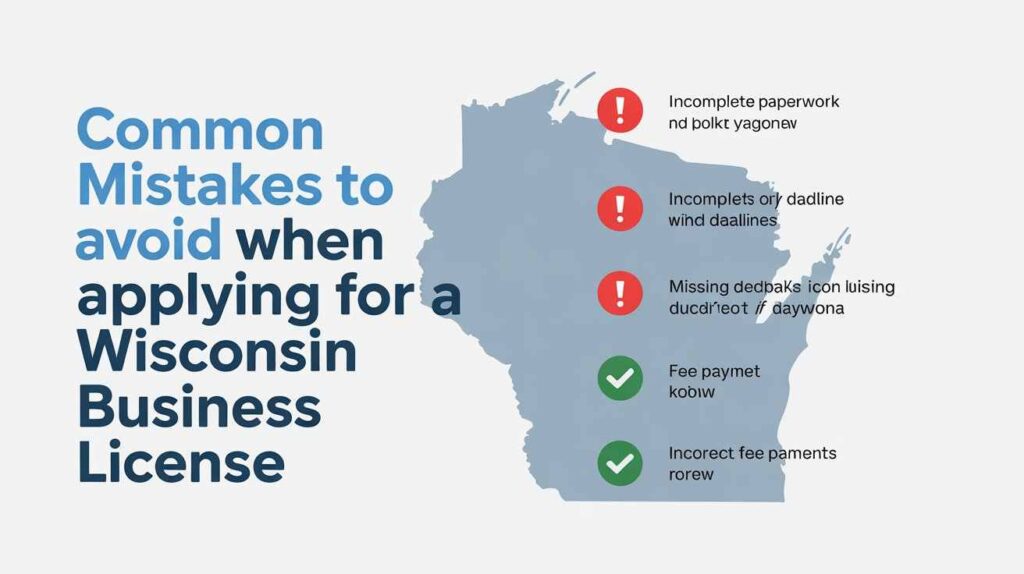
1. Neglecting Local Business Licenses
Many new business owners focus on state-level requirements and overlook the need for local business licenses. Always check with your city or county clerk’s office to make sure you’re fully compliant.
2. Missing Deadlines for Renewal
It’s important to keep track of your license renewal dates. Missing deadlines can result in penalties or the suspension of your business operations.
3. Overlooking Specialized Permits
If your business operates in a regulated field, you may need additional permits, such as food handling or environmental permits. Be sure to research your specific industry’s requirements.
Final Thoughts
Securing a Wisconsin business license is one of the first steps in establishing your business in the state. By understanding the types of licenses you need, the application process, and the fees involved, you can ensure that you are compliant with state and local regulations from the very start.
While it can be an intricate process depending on your business type, obtaining the right licenses not only ensures legal compliance but also adds credibility to your business. Once you’ve acquired the necessary licenses, you can focus on the growth and success of your company with confidence.
Be sure to stay informed about any changes in regulations or requirements in Wisconsin. Regularly check with the state and local authorities to ensure that your business remains compliant and avoids unnecessary fines or complications.
FAQs about Wisconsin Business License
1. What is a Wisconsin business license?
A Wisconsin business license is a legal authorization required to operate a business in the state. It helps regulate various industries and ensures that businesses comply with health, safety, tax, zoning, and other state and local regulations. The specific licenses required depend on the type of business you’re operating.
2. Who needs a business license in Wisconsin?
Most businesses in Wisconsin require some form of business license, including:
- Retail businesses (whether online or physical)
- Restaurants and food service businesses (require health and food handling permits)
- Health-related businesses (like medical practitioners or clinics)
- Contractors and tradespeople (such as plumbers and electricians)
The specific license requirements depend on the nature of the business.
3. What types of business licenses are required in Wisconsin?
There are various types of business licenses in Wisconsin, which include:
- State Business Licenses: Issued by state departments like the Department of Revenue, Department of Safety and Professional Services, and Department of Agriculture.
- Local Business Licenses: Issued by the city or county government where your business is located, such as zoning, health department, food vendor, and signage permits.
- Specialized Industry Licenses: Required for industries like construction, agriculture, or transportation.
4. How do I apply for a Wisconsin business license?
To apply for a Wisconsin business license:
- Register your business name with the Wisconsin Department of Financial Institutions (DFI).
- Choose your business structure (e.g., sole proprietorship, LLC, corporation).
- Apply for necessary licenses by visiting the relevant state or local agencies.
- Complete the application form, either online or on paper.
- Pay applicable fees (costs vary by license).
- Renew your license annually or as required by your business type.
5. What documents are required when applying for a Wisconsin business license?
Typical documents required include:
- Business name and address
- Ownership structure
- Business activities description
- Number of employees
- Estimated annual revenue
Ensure all information is accurate when submitting your application.
6. How much does a Wisconsin business license cost?
The cost of obtaining a Wisconsin business license varies:
- Sales tax permits are typically free.
- Professional licenses (e.g., medical, legal) may range from $50 to several hundred dollars.
- Local business licenses can range from $25 to $300 or more annually.
7. Can I apply for a Wisconsin business license online?
Yes, many business licenses can be applied for online through the relevant state or local agency websites. For example, you can apply for a sales tax permit through the Wisconsin Department of Revenue online.
8. Do I need a business license if I’m running an online business in Wisconsin?
Yes, online businesses are generally required to obtain a business license, especially if they are selling taxable goods or services. Be sure to check the specific requirements for your business type.
9. What happens if I operate without a Wisconsin business license?
Operating without a required business license in Wisconsin can result in penalties, fines, or even the closure of your business. It’s essential to ensure you have the correct licenses before opening your business.
10. How do I renew my Wisconsin business license?
Business licenses typically need to be renewed annually. Check the renewal deadlines for your specific license. Most licenses can be renewed online through the relevant agency’s website. Failure to renew on time could result in fines or suspension of your business operations.
11. Are there any exemptions for small businesses in Wisconsin?
Some small businesses may be exempt from certain licenses, but this depends on the business type and location. It’s important to verify whether your business qualifies for any exemptions by consulting with the Wisconsin Department of Revenue or your local municipality.
12. Can I operate without a local business license in Wisconsin?
No, most businesses in Wisconsin need both state and local business licenses. While state-level licenses are important, local licenses (issued by your city or county) are typically required to ensure your business meets local zoning, safety, and health regulations.
13. What are some common mistakes to avoid when applying for a Wisconsin business license?
- Neglecting local business licenses: Many business owners focus on state licenses and forget about the required local permits.
- Missing renewal deadlines: Failing to renew your business license on time can lead to penalties or shutdowns.
- Overlooking specialized permits: Some businesses in regulated industries need additional permits. Don’t forget to check if your business requires them.
14. How long does it take to receive a Wisconsin business license?
Processing times vary, but most licenses are typically issued within a few weeks. The exact time will depend on the type of business license and whether you apply online or by paper.
15. Do I need a license for a home-based business in Wisconsin?
Yes, even home-based businesses in Wisconsin often require a business license, especially if you’re selling goods or services. Contact your local city or county clerk’s office for specific requirements related to home businesses.
16. Can I apply for a Wisconsin business license as a sole proprietor?
Yes, sole proprietors need to obtain the appropriate business licenses in Wisconsin, depending on their business activities. You must also register your business name with the Wisconsin Department of Financial Institutions if it differs from your personal name.
17. How do I know which licenses apply to my Wisconsin business?
The licenses required for your business will depend on your industry, location, and business activities. You can check with the Wisconsin Department of Revenue, your local government office, or consult industry-specific regulatory agencies for guidance on the necessary licenses and permits.
ALSO READ
Zicklin School of Business Acceptance Rate: How to Get In
Enterprise Data Security Solutions for Modern Businesses
AI Chatbot Conversations Archive For Better Engagement