
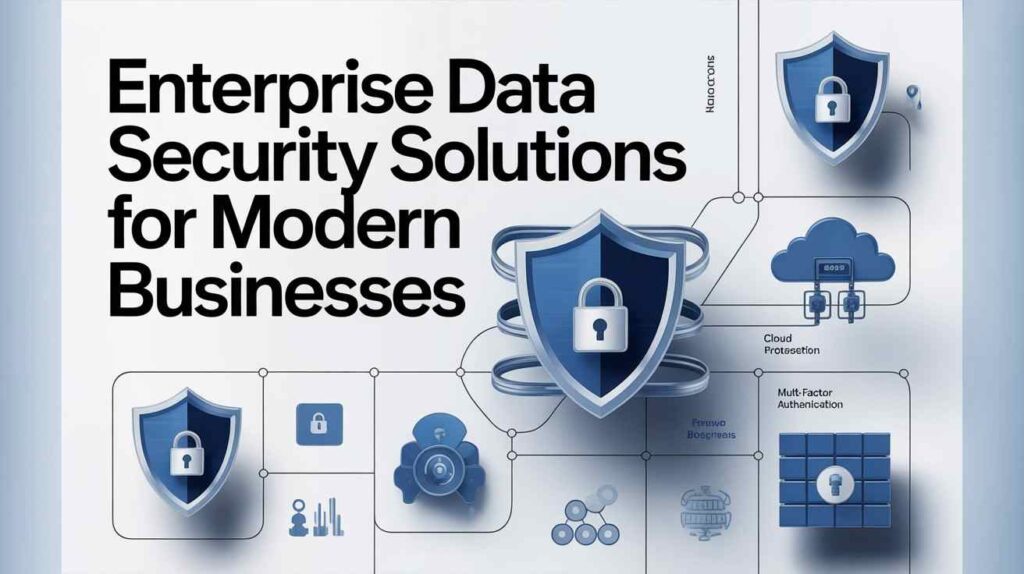
Introduction
In today’s hyper-connected digital environment, enterprise data security solutions have become essential for organisations of every size. Businesses generate, store, and transmit enormous volumes of sensitive data daily — from customer records and financial information to intellectual property and strategic business plans. Without robust security systems in place, this data becomes a prime target for cybercriminals, insider threats, and accidental breaches.
Enterprise data security solutions are not just about installing antivirus software or setting up firewalls. They represent a comprehensive, multi-layered approach to protecting critical business information across networks, devices, cloud environments, and remote work infrastructures. As cyber threats evolve in sophistication, enterprises must adopt proactive and scalable security frameworks that align with their digital transformation goals.
This article explores enterprise data security solutions in depth — including their components, technologies, implementation strategies, compliance requirements, and future trends — helping organisations build a resilient security posture.
What Are Enterprise Data Security Solutions?
Enterprise data security solutions refer to integrated technologies, policies, and procedures designed to protect an organisation’s data from unauthorised access, corruption, theft, or loss. These solutions operate across multiple layers of IT infrastructure and ensure that data remains secure throughout its lifecycle — from creation and storage to transmission and deletion.
Unlike basic security tools used by individuals or small businesses, enterprise-level solutions are:
- Scalable
- Policy-driven
- Compliance-focused
- Centrally managed
- Designed for complex infrastructures
They address risks across:
- On-premises servers
- Cloud environments
- Hybrid systems
- Remote workforce devices
- Third-party integrations
Why Enterprise Data Security Is More Important Than Ever
1. Rising Cyber Threats
Cyberattacks are increasing in frequency and sophistication. Ransomware, phishing, zero-day exploits, and advanced persistent threats (APTs) target enterprise environments because of the high-value data they store.
2. Regulatory Compliance Requirements
Enterprises must comply with strict regulations such as:
- GDPR
- HIPAA
- PCI-DSS
- CCPA
- SOX
Non-compliance may lead to significant financial penalties, legal action, and harm to an organisation’s reputation.
3. Remote and Hybrid Work Environments
The expansion of remote work has increased attack surfaces. Employees accessing enterprise systems from home networks and personal devices create additional vulnerabilities.
4. Cloud Migration
As organisations migrate to cloud services, data is distributed across multiple environments, requiring more sophisticated protection strategies.
Core Components of Enterprise Data Security Solutions
Effective enterprise data security solutions typically include the following components:
1. Data Encryption
Encryption ensures that sensitive information remains unreadable to unauthorized users. It applies to:
- Data at rest
- Data in transit
- Data in use
Strong encryption protocols protect enterprise data even if it is intercepted.
2. Identity and Access Management (IAM)
IAM systems control who can access specific data and systems. Features include:
- Multi-factor authentication (MFA)
- Role-based access control (RBAC)
- Privileged access management (PAM)
- Single sign-on (SSO)
3. Data Loss Prevention (DLP)
DLP tools monitor and prevent unauthorised data transfers. They detect sensitive information leaving the organisation via:
- Cloud uploads
- USB devices
- Web applications
4. Network Security
Network security solutions include:
- Firewalls
- Intrusion detection systems (IDS)
- Intrusion prevention systems (IPS)
- Secure VPNs
They protect enterprise data from external attacks.
5. Endpoint Security
Every device connected to the enterprise network must be secured. Endpoint protection includes:
- Antivirus
- EDR (Endpoint Detection and Response)
- Device monitoring
- Patch management
6. Cloud Security Solutions
Cloud-specific tools ensure protection across SaaS, PaaS, and IaaS environments through:
- Cloud access security brokers (CASB)
- Cloud workload protection platforms (CWPP)
- Secure configuration management
7. Backup and Disaster Recovery
Reliable backup systems ensure business continuity in case of ransomware attacks or data loss. Disaster recovery plans allow organisations to restore operations quickly.
Types of Enterprise Data Security Threats
Understanding threats helps organisations implement effective enterprise data security solutions.
External Threats
- Ransomware attacks
- Phishing campaigns
- Distributed Denial of Service (DDoS)
- Malware injections
Insider Threats
- Disgruntled employees
- Negligent staff
- Compromised credentials
Advanced Persistent Threats (APTs)
Long-term, targeted attacks aimed at stealing sensitive information.
Supply Chain Attacks
Attackers infiltrate enterprise systems through third-party vendors.
Implementing Enterprise Data Security Solutions
Step 1: Conduct a Risk Assessment
Identify:
- Sensitive data types
- Vulnerabilities
- Compliance requirements
- Existing security gaps
Step 2: Develop a Security Strategy
A comprehensive strategy should align with business goals and include:
- Security policies
- Access controls
- Monitoring protocols
- Incident response planning
Step 3: Adopt a Zero Trust Architecture
Zero Trust operates on the principle that no user or device is automatically considered trustworthy. It requires continuous verification and strict access controls.
Step 4: Employee Training and Awareness
Human error is a leading cause of breaches. Regular training reduces risk significantly.
Step 5: Continuous Monitoring and Auditing
Security must be monitored in real-time using:
- SIEM systems
- Threat intelligence platforms
- Behaviour analytics tools
Benefits of Enterprise Data Security Solutions
1. Data Protection
Safeguards confidential and sensitive information.
2. Business Continuity
Ensures operations continue during cyber incidents.
3. Regulatory Compliance
Avoids penalties and legal issues.
4. Customer Trust
Strengthens brand reputation.
5. Reduced Financial Loss
Prevents costly breaches and ransomware payments.
Enterprise Data Security in Cloud Environments
Modern enterprises rely heavily on cloud services. Enterprise data security solutions must address:
- Shared responsibility models
- Misconfigured storage buckets
- API vulnerabilities
- Shadow IT risks
Cloud-native security tools are essential for maintaining visibility and control.
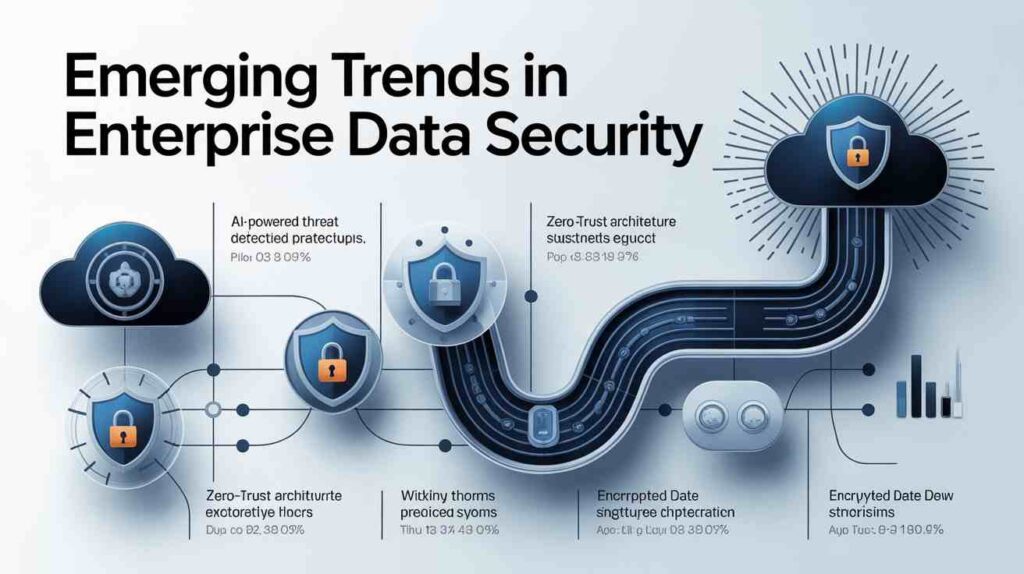
Emerging Trends in Enterprise Data Security
1. Artificial Intelligence and Machine Learning
AI-driven systems detect anomalies and predict potential threats before damage occurs.
2. Behavioural Analytics
Monitoring user behaviour helps identify suspicious activities.
3. Data-Centric Security Models
Security now focuses directly on protecting the data itself rather than just the perimeter.
4. Automation in Security Operations
Automated incident response helps minimise response delays and limits the risk of human mistakes.
Challenges in Deploying Enterprise Data Security Solutions
- Budget constraints
- Integration complexity
- Rapid technological changes
- Skill shortages in cybersecurity
- Managing multi-cloud environments
Despite these challenges, investing in enterprise data security solutions is far more cost-effective than dealing with a data breach.
Choosing the Right Enterprise Data Security Solutions
When selecting solutions, enterprises should consider:
- Scalability
- Compatibility with existing systems
- Compliance capabilities
- Vendor reputation
- Real-time monitoring features
- Automation capabilities
- Support and maintenance services
A tailored solution aligned with organisational needs provides the best protection.
Final Thoughts
Enterprise data security solutions are no longer optional — they are fundamental to modern business survival. As organisations continue to digitise operations, expand remote work models, and adopt cloud infrastructure, the risks surrounding sensitive data grow exponentially. Implementing comprehensive security frameworks is essential to protect intellectual property, customer trust, and business continuity.
Forward-thinking enterprises understand that data security is not a one-time investment but an ongoing process. Continuous monitoring, employee education, evolving technologies, and strategic planning are critical elements of a resilient security ecosystem. Businesses that prioritise enterprise data security solutions today will be better equipped to navigate tomorrow’s digital challenges with confidence and stability.
Frequently Asked Questions (FAQs) About Enterprise Data Security Solutions
1. What are enterprise data security solutions?
Enterprise data security solutions are integrated technologies, policies, and procedures designed to protect organisational data from unauthorised access, theft, corruption, or loss. They provide multi-layered protection across networks, cloud platforms, endpoints, and hybrid environments.
2. Why are enterprise data security solutions important for modern businesses?
They are essential because organisations handle large volumes of sensitive data daily. Without strong security systems, businesses risk cyberattacks, regulatory penalties, financial losses, and reputational damage.
3. How are enterprise data security solutions different from basic security software?
Unlike basic antivirus or firewall tools, enterprise-level solutions are scalable, centrally managed, compliance-driven, and designed for complex infrastructures such as hybrid cloud environments and remote workforces.
4. What are the main components of enterprise data security solutions?
Core components include:
- Data encryption
- Identity and Access Management (IAM)
- Data Loss Prevention (DLP)
- Network security systems
- Endpoint security tools
- Cloud security solutions
- Backup and disaster recovery systems
5. What types of cyber threats do enterprise security solutions protect against?
They protect against ransomware, phishing attacks, zero-day exploits, malware injections, Distributed Denial of Service (DDoS) attacks, insider threats, Advanced Persistent Threats (APTs), and supply chain attacks.
6. What is Zero Trust architecture in enterprise data security?
Zero Trust is a security model that assumes no user or device is trusted by default. Every access request must be continuously verified through strict authentication and authorisation controls.
7. How does encryption protect enterprise data?
Encryption converts sensitive information into unreadable code that can only be accessed with authorised keys. It protects data at rest, in transit, and in use, ensuring confidentiality even if data is intercepted.
8. Why is Identity and Access Management (IAM) important?
IAM ensures that only authorised individuals can access specific systems and data. It uses tools such as multi-factor authentication (MFA), role-based access control (RBAC), and privileged access management (PAM) to minimize security risks.
9. What role does employee training play in data security?
Mistakes made by individuals are a major factor behind many data breaches. Regular security awareness training helps employees recognise phishing attempts, follow best practices, and reduce the risk of accidental data exposure.
10. How do enterprise data security solutions support regulatory compliance?
They help organisations meet regulatory requirements such as GDPR, HIPAA, PCI-DSS, CCPA, and SOX by enforcing structured security policies, monitoring data access, and maintaining audit trails.
11. What are the biggest challenges in deploying enterprise data security solutions?
Common challenges include budget limitations, integration complexity, rapid technology changes, cybersecurity skill shortages, and managing multi-cloud environments.
12. How do cloud environments impact enterprise data security?
Cloud migration increases the attack surface and introduces risks such as misconfigured storage, API vulnerabilities, and shadow IT. Cloud-native security tools and monitoring systems are necessary to maintain visibility and control.
13. What are emerging trends in enterprise data security?
Key trends include:
- AI and machine learning for threat detection
- Behavioural analytics for anomaly identification
- Data-centric security models
- Automation in security operations
14. How can organisations choose the right enterprise data security solutions?
Businesses should evaluate scalability, system compatibility, compliance capabilities, vendor reputation, real-time monitoring features, automation options, and ongoing support services before making a decision.
15. Is investing in enterprise data security cost-effective?
Yes. Although implementation may require significant investment, the cost of preventing breaches is far lower than the financial, legal, and reputational damage caused by cyberattacks.
ALSO READ
Complete Reviews of AI-Based UGC Video Creation Services