
Introduction
Ai transformation not technology problem is a statement that challenges one of the biggest misconceptions in modern business. Across industries, organizations are investing millions in artificial intelligence platforms, automation tools, and data infrastructure. Yet despite this heavy spending, many AI initiatives fail to deliver meaningful results. The reason is surprisingly simple: AI transformation is not primarily a technical issue—it is a human, organizational, and leadership challenge.
Companies often believe that adopting AI means buying the right software, hiring data scientists, or migrating systems to the cloud. While these steps matter, they are only enablers. The real work of AI transformation lies in how people think, how decisions are made, how teams collaborate, and how leadership aligns technology with business purpose. Without addressing these deeper factors, even the most advanced AI tools will fall short.
This article explores why ai transformation not technology problem is a truth leaders must understand to succeed. We will examine the human side of AI, cultural barriers, leadership responsibilities, strategy alignment, ethical considerations, and practical steps organizations can take to make AI transformation real and sustainable.
Understanding AI Transformation Beyond Technology
AI transformation is often misunderstood as a one-time technical upgrade. In reality, it is a continuous evolution of how an organization operates, learns, and creates value. Technology is only one component of this journey.
True AI transformation changes:
- How decisions are made
- How employees work and collaborate
- How customers are served
- How value is created and measured
When leaders treat AI as an IT project, it becomes isolated from core business processes. This leads to disconnected pilots, unused models, and frustrated teams. Recognizing that ai transformation not technology problem shifts the focus toward organizational readiness rather than just technical readiness.
Why Technology Alone Fails to Deliver AI Value
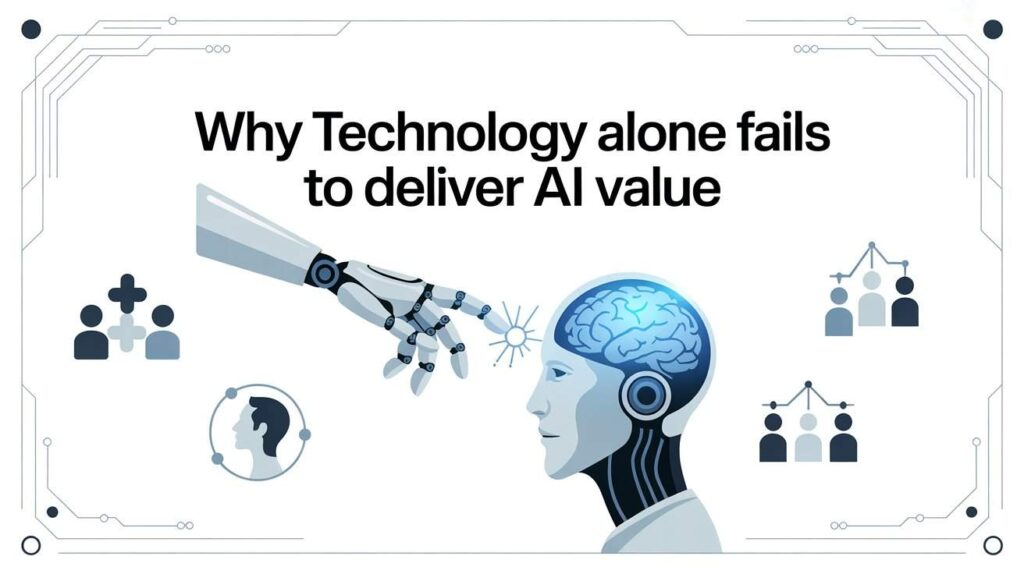
Many organizations deploy AI tools that technically work but fail in practice. The models are accurate, the infrastructure is scalable, yet the business impact is minimal. This happens because technology does not automatically change behavior.
Some common reasons include:
- Employees do not trust AI recommendations
- Managers override AI insights based on intuition
- Teams lack clarity on how AI supports business goals
- Processes are not redesigned to integrate AI outputs
Technology can produce insights, but humans must act on them. Without trust, understanding, and alignment, AI remains unused or underutilized. This reinforces why ai transformation not technology problem is a leadership reality.
The Central Role of Leadership in AI Transformation
Leadership is the most critical factor in successful AI transformation. Leaders set the vision, define priorities, allocate resources, and influence organizational culture. If leadership treats AI as optional or experimental, the rest of the organization will do the same.
Effective AI leadership requires:
- Clear articulation of why AI matters to the business
- Alignment of AI initiatives with strategic objectives
- Willingness to change existing processes and power structures
- Commitment to learning and adaptation
Leaders must also model behavior by using AI insights in their own decision-making. When executives rely on AI-driven data, it signals credibility and importance across the organization.
Organizational Culture as the Hidden Barrier
Culture determines how people respond to change. In organizations with rigid hierarchies, fear of failure, or resistance to experimentation, AI struggles to take root. Employees may see AI as a threat rather than an opportunity.
A culture that supports AI transformation encourages:
- Curiosity and continuous learning
- Data-driven decision-making
- Psychological safety to experiment and fail
- Collaboration across departments
When culture is ignored, AI initiatives face silent resistance. This again proves that ai transformation not technology problem, but a cultural one that leaders must actively shape.
Mindset Shift: From Automation Fear to Augmentation Thinking
One of the biggest psychological challenges in AI transformation is fear—fear of job loss, irrelevance, or loss of control. These fears can stall adoption even when AI clearly adds value.
High-performing organizations view AI as a tool that enhances human capabilities rather than one that replaces them. AI becomes a tool that:
- Enhances human judgment
- Reduces repetitive tasks
- Frees time for creative and strategic work
- Improves accuracy and consistency
This mindset shift must be communicated clearly and consistently. Training alone is not enough; people need reassurance, transparency, and involvement in the transformation process.
Strategy Alignment: AI Must Serve Business Purpose
AI projects often fail because they lack strategic clarity. Organizations experiment with AI because competitors are doing it, not because it solves a defined problem.
Strategic AI transformation starts by asking:
- What business problems are most critical?
- Where can AI create measurable value?
- How will success be defined and tracked?
When AI initiatives are tied to clear outcomes—such as customer satisfaction, operational efficiency, or revenue growth—they gain relevance and momentum. This strategic grounding reinforces the idea that ai transformation not technology problem, but a business leadership responsibility.
The Importance of Cross-Functional Collaboration
AI transformation cuts across departments. Data, operations, marketing, finance, HR, and IT must work together. Silos are one of the biggest obstacles to success.
Cross-functional collaboration ensures:
- Better problem definition
- More relevant data inputs
- Higher adoption of AI outputs
- Shared ownership of results
Leaders play a key role in breaking silos by encouraging shared goals and accountability. Without collaboration, AI remains confined to technical teams with limited organizational impact.
Ethical Considerations and Trust Building
Trust is essential for AI adoption. Employees and customers must believe that AI systems are fair, transparent, and aligned with organizational values.
Ethical AI leadership involves:
- Clear governance frameworks
- Transparency in how AI decisions are made
- Bias detection and mitigation
- Responsible data usage
Ignoring ethics undermines trust and damages reputation. Addressing ethical concerns proactively further highlights why ai transformation not technology problem, but a values-driven leadership challenge.
Skills Development: Beyond Technical Training
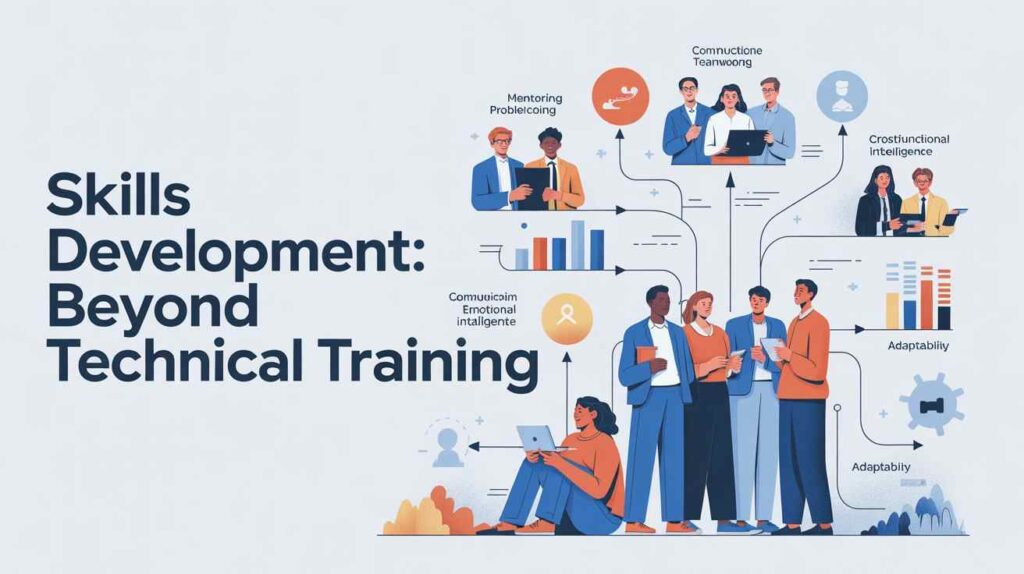
Many organizations focus solely on technical AI skills, such as machine learning or data engineering. While important, these skills alone do not ensure transformation.
Equally important are:
- Data literacy for non-technical employees
- Critical thinking and interpretation skills
- Change management capabilities
- Leadership and communication skills
AI transformation succeeds when employees at all levels understand how AI supports their roles and decisions.
Measuring AI Transformation Success
Traditional metrics often fail to capture AI impact. Measuring success only by model accuracy or system uptime misses the bigger picture.
Effective AI transformation metrics include:
- Adoption rates across teams
- Decision-making improvements
- Process efficiency gains
- Customer experience enhancements
- Cultural shifts toward data usage
These metrics focus on outcomes rather than outputs, reinforcing the human and organizational nature of AI transformation.
Common Mistakes Organizations Make in AI Transformation
Many failures follow predictable patterns:
- Treating AI as an IT initiative
- Ignoring employee concerns
- Lack of executive sponsorship
- Poor data governance
- Chasing trends without strategy
Avoiding these mistakes requires leadership awareness and humility. Accepting that ai transformation not technology problem allows organizations to course-correct early.
Practical Steps to Lead Successful AI Transformation
Organizations can improve their chances of success by focusing on people first:
- Establish a well-defined AI strategy that directly supports organizational objectives.
- Secure active executive sponsorship
- Invest in culture and mindset change
- Promote cross-functional collaboration
- Build trust through transparency and ethics
- Measure impact beyond technical metrics
These steps shift AI transformation from experimentation to sustainable value creation.
Final Thoughts
The idea that AI transformation not technology problem is more than a catchy phrase—it is a critical insight that separates organizations that merely adopt AI from those that truly benefit from it. Technology can enable change, but it cannot create it on its own. Real AI transformation happens when leaders take responsibility for shaping vision, culture, and strategy, and when people across the organization understand why AI matters and how it supports their work. Without this human-centered foundation, even the most advanced AI systems remain underused, misunderstood, or resisted.
Ultimately, successful AI transformation is a leadership challenge that demands courage, clarity, and commitment. Leaders must be willing to rethink existing processes, invest in people, encourage collaboration, and build trust through ethical and transparent practices. When organizations accept that ai transformation not technology problem, but a people-driven journey, AI shifts from being an experimental tool to a powerful driver of sustainable growth, smarter decisions, and long-term competitive advantage.
Frequently Asked Questions (FAQs)
1. What does ai transformation not technology problem really mean?
It means that AI success depends more on leadership, culture, mindset, and strategy than on tools or software. Technology enables AI, but people and leadership determine whether it delivers real value.
2. Why do so many AI initiatives fail despite heavy investment?
Most AI initiatives fail because organizations focus on tools instead of adoption, trust, and behavior change. Without clear leadership direction and cultural readiness, AI insights are ignored or overridden.
3. Is AI transformation mainly a leadership challenge?
Yes. Leadership plays the central role in setting vision, aligning AI with business goals, allocating resources, and modeling data-driven decision-making across the organization.
4. Can AI transformation succeed without changing company culture?
No. Culture strongly influences how employees respond to AI. A resistant or fear-based culture can silently block adoption, even if the technology works perfectly.
5. Why don’t employees trust AI recommendations?
Employees may lack understanding of how AI works, fear job displacement, or see AI as conflicting with their experience. Trust is built through transparency, communication, and involvement.
6. Does AI replace human decision-making?
No. AI is most effective when it augments human judgment. It enhances accuracy, reduces repetitive work, and supports better decisions rather than replacing people entirely.
7. How important is strategy in AI transformation?
Strategy is critical. AI must solve real business problems and be tied to measurable outcomes. Without strategic alignment, AI becomes an experiment rather than a value-creating capability.
8. What role does cross-functional collaboration play in AI success?
AI transformation requires collaboration between IT, data teams, operations, HR, finance, and leadership. Silos limit data quality, adoption, and overall impact.
9. Why are ethics and trust important in AI adoption?
Ethical AI builds trust with employees and customers. Transparency, bias mitigation, and responsible data use ensure AI aligns with organizational values and avoids reputational risks.
10. Do employees need advanced technical skills to work with AI?
Not necessarily. Data literacy, critical thinking, and understanding AI outputs are often more important than deep technical expertise for most roles.
11. How should organizations measure AI transformation success?
Success should be measured by outcomes such as adoption rates, improved decision-making, efficiency gains, customer experience, and cultural shifts—not just technical performance.
12. What is the most common mistake organizations make with AI?
The most common mistake is treating AI as an IT or technology project instead of a people-driven organizational change led by leadership.
ALSO READ
World Tech Toys Helicopter Guide for Fun Flying
Technology Expense Management for Smarter Business Control
Tech Capital of the World: Which Cities Lead Global Innovation