

Introduction
The technology upgradation fund plays a crucial role in strengthening industrial growth by enabling businesses to modernise their machinery, adopt advanced processes, and enhance productivity. In today’s competitive global economy, industries cannot survive on outdated technology. Modern equipment, digital systems, and automated production processes are essential for efficiency, cost reduction, and quality improvement. This is where the technology upgradation fund becomes highly significant.
Governments across developing economies have introduced structured funding schemes under the umbrella of technology upgradation fund programmes to support small, medium, and large enterprises. These initiatives aim to reduce the financial burden of technological transformation while boosting exports, employment generation, and sustainable development.
This article provides a comprehensive overview of the technology upgradation fund, including its objectives, structure, benefits, eligibility criteria, implementation mechanisms, challenges, and long-term impact.
Understanding the Technology Upgradation Fund
The technology upgradation fund is a financial assistance programme designed to encourage industries to upgrade their production technologies. It typically offers interest subsidies, capital subsidies, or credit-linked support to businesses investing in modern machinery and advanced equipment.
The primary objective is to enhance competitiveness, particularly in sectors such as textiles, manufacturing, engineering, pharmaceuticals, and MSMEs. In many countries, industrial growth is hindered by outdated infrastructure and limited access to capital. Through structured financial assistance, the fund helps bridge this gap.
Unlike general business loans, this fund is specifically targeted towards technological modernisation. It ensures that industries adopt internationally recognised standards, improve product quality, and enhance operational efficiency.
Historical Background and Evolution
Technology upgradation schemes emerged in response to global trade liberalisation. As markets opened and competition intensified, industries in developing economies struggled to compete with technologically advanced nations.
To address this issue, governments introduced structured funding models. Over time, the schemes evolved to include digital transformation, automation, artificial intelligence integration, and environmentally sustainable technologies.
The initial focus was on basic machinery replacement. However, modern versions of the technology upgradation fund now include smart manufacturing, green technology adoption, energy efficiency upgrades, and Industry 4.0 solutions.
Objectives of the Technology Upgradation Fund
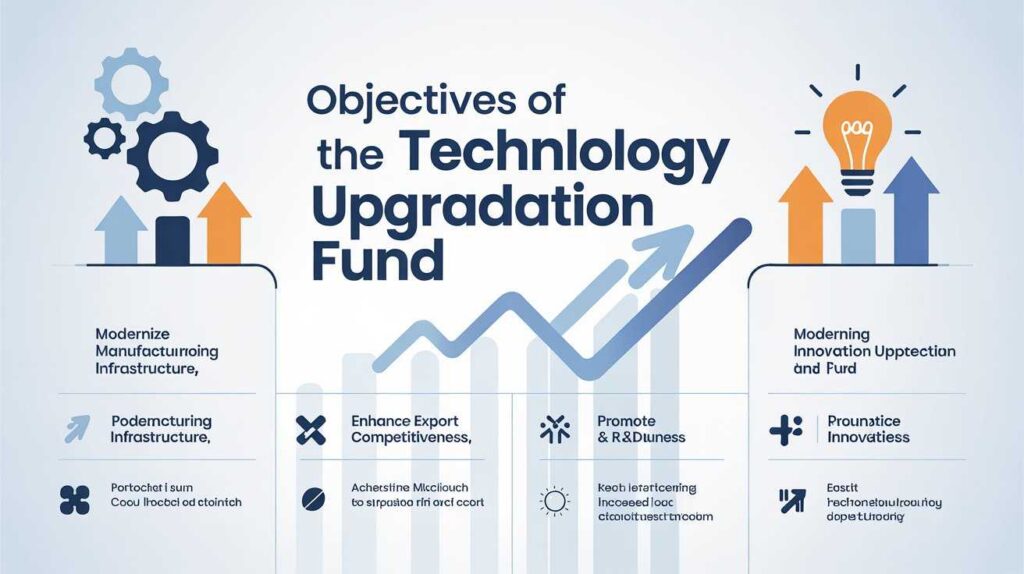
The technology upgradation fund is structured around several core objectives:
- Improving industrial productivity
- Enhancing product quality standards
- Boosting export competitiveness
- Encouraging innovation and research
- Generating employment
- Supporting MSME growth
- Promoting sustainable manufacturing
By aligning financial incentives with industrial reform, the scheme strengthens both micro-level businesses and macroeconomic performance.
Key Features of the Fund
The structure of the technology upgradation fund typically includes:
1. Interest Subsidy
Businesses receive a percentage reduction on interest rates for loans taken to purchase modern machinery.
2. Capital Subsidy
A fixed percentage of investment cost is reimbursed as a subsidy.
3. Credit-Linked Assistance
Subsidy is linked directly with bank financing, ensuring proper monitoring.
4. Sector-Specific Focus
Some sectors, especially textiles and manufacturing, receive targeted benefits.
5. Compliance Requirements
Beneficiaries must meet quality, environmental, and operational standards.
These features make the scheme structured, accountable, and growth-oriented.
Sectors Benefiting from the Fund
The technology upgradation fund primarily supports:
- Textile and garment industries
- Manufacturing and engineering
- MSMEs
- Pharmaceutical production
- Renewable energy equipment manufacturing
- Food processing industries
Among these, the textile sector often receives significant attention due to its labour-intensive nature and export potential.
Importance for MSMEs
Small and medium enterprises often face financial limitations when upgrading technology. High interest rates and limited collateral restrict their borrowing capacity.
The technology upgradation fund provides a solution by reducing financial pressure. This allows MSMEs to:
- Increase production efficiency
- Reduce wastage
- Improve product quality
- Compete with larger corporations
- Expand into international markets
Without such support, many small enterprises would struggle to modernise.
Economic Impact
The economic implications of the technology upgradation fund are substantial.
1. Increased Productivity
Modern machinery reduces downtime and improves output consistency.
2. Export Growth
Upgraded technology enables compliance with international quality standards.
3. Employment Generation
Advanced production facilities create skilled job opportunities.
4. Industrial Modernisation
National industrial sectors become globally competitive.
5. GDP Contribution
Improved industrial performance positively affects national income.
By encouraging long-term investment in innovation, the fund strengthens economic stability.
Environmental and Sustainability Benefits
Modern technology is often more energy-efficient and environmentally friendly. Through structured incentives, the technology upgradation fund promotes:
- Reduced carbon emissions
- Efficient energy use
- Waste management improvements
- Cleaner production processes
This aligns industrial growth with sustainable development goals.
Implementation Process
The typical implementation process includes:
- Application submission through designated banks or government portals
- Verification of eligibility
- Approval of loan and subsidy structure
- Installation of upgraded machinery
- Post-installation inspection
- Disbursement of subsidy
Transparency and regulatory oversight are critical to ensure proper fund utilisation.
Eligibility Criteria
Although criteria vary by country, general eligibility requirements include:
- Registered business entity
- Valid financial statements
- Clear business expansion plan
- Investment in approved technology categories
- Compliance with environmental standards
Some schemes prioritise export-oriented units and MSMEs.
Challenges in Implementation
Despite its advantages, the technology upgradation fund faces certain challenges:
- Delays in subsidy disbursement
- Complex documentation requirements
- Limited awareness among small businesses
- Risk of misuse
- Administrative bottlenecks
Governments continuously refine policies to address these concerns.
Role in Digital Transformation
The industrial landscape is shifting towards automation and digitalisation. The technology upgradation fund now supports:
- Smart manufacturing systems
- AI integration
- Robotics
- Data analytics
- ERP implementation
- IoT-based production monitoring
This ensures industries remain competitive in the era of Industry 4.0.
Comparative Global Perspective
Many countries implement similar programmes under different names. These schemes focus on strengthening domestic industries against global competition.
Developed economies emphasise innovation grants, while developing nations provide subsidy-based assistance. The common objective remains technological competitiveness and economic resilience.
Long-Term Strategic Importance
The technology upgradation fund is not just a financial scheme; it is a strategic industrial policy tool. It promotes innovation-driven growth and strengthens domestic production capacity.
Countries aiming to reduce import dependency and enhance manufacturing exports rely heavily on such initiatives.
Long-term sustainability requires continuous monitoring, transparent governance, and regular policy updates.
Future Outlook
The future of the technology upgradation fund lies in:
- Digital integration
- Green manufacturing incentives
- Skill development linkage
- AI and robotics financing
- Automation support
- Climate-friendly production technologies
Governments may further align the scheme with carbon neutrality goals and sustainable industrial expansion.
Final Thoughts
The technology upgradation fund serves as a powerful catalyst for industrial transformation. In a world driven by innovation and technological advancement, businesses cannot afford to rely on outdated production systems. By offering structured financial support, this initiative enables enterprises to modernise operations, enhance quality, and compete globally.
Beyond immediate financial relief, the fund strengthens economic resilience. It supports employment, promotes exports, and encourages sustainable manufacturing practices. As industries embrace digital transformation and green technologies, the technology upgradation fund will continue to play a pivotal role in shaping the future of industrial growth and national development.
Frequently Asked Questions (FAQs) About Technology Upgradation Fund
1. What is the Technology Upgradation Fund?
The technology upgradation fund is a government-supported financial assistance programme designed to help industries modernise machinery, adopt advanced production technologies, and improve productivity. It provides structured incentives such as interest subsidies and capital subsidies to encourage technological transformation.
2. Why is the Technology Upgradation Fund important for industrial growth?
The fund strengthens industrial growth by enabling businesses to replace outdated systems with modern equipment. This improves efficiency, reduces production costs, enhances quality standards, and helps industries remain competitive in global markets.
3. How does the Technology Upgradation Fund differ from a regular business loan?
Unlike general business loans, the technology upgradation fund is specifically targeted at technological modernisation. It offers financial incentives such as interest subsidies or capital reimbursement, making it more affordable for businesses to invest in advanced machinery.
4. Which sectors benefit the most from the Technology Upgradation Fund?
The fund primarily supports textiles, manufacturing, engineering, pharmaceuticals, MSMEs, renewable energy equipment manufacturing, and food processing industries. The textile sector often receives special focus due to its export potential and labour-intensive nature.
5. What types of financial support are available under the fund?
The fund typically offers:
- Interest subsidies on loans for machinery upgrades
- Capital subsidies that reimburse a portion of investment costs
- Credit-linked assistance through banks
These mechanisms reduce the financial burden of technological investment.
6. How does the Technology Upgradation Fund support MSMEs?
MSMEs often face financial constraints and high borrowing costs. The fund reduces interest rates and provides subsidies, enabling small businesses to upgrade technology, increase productivity, reduce wastage, and compete with larger companies.
7. What is the application process for the Technology Upgradation Fund?
The typical process includes:
- Submitting an application through designated banks or government portals
- Verification of eligibility
- Approval of loan and subsidy structure
- Installation of upgraded machinery
- Post-installation inspection
- Disbursement of subsidy
Proper documentation and compliance are essential for approval.
8. What are the eligibility requirements for businesses?
Although requirements vary by country, general criteria include:
- Being a registered business entity
- Providing valid financial statements
- Presenting a clear expansion or upgrade plan
- Investing in approved technology categories
- Meeting environmental compliance standards
Export-oriented units and MSMEs may receive priority.
9. Does the Technology Upgradation Fund support digital transformation?
Yes, modern versions of the fund support smart manufacturing, artificial intelligence integration, robotics, ERP systems, IoT-based monitoring, and other Industry 4.0 technologies. This ensures industries stay competitive in a digital economy.
10. How does the fund contribute to environmental sustainability?
The technology upgradation fund promotes energy-efficient machinery, cleaner production processes, reduced carbon emissions, and improved waste management systems. This aligns industrial growth with sustainable development goals.
11. What economic impact does the Technology Upgradation Fund create?
The fund contributes to increased productivity, export growth, employment generation, industrial modernisation, and GDP expansion. By encouraging innovation, it strengthens long-term economic stability.
12. What challenges are associated with the Technology Upgradation Fund?
Some common challenges include delays in subsidy disbursement, complex documentation procedures, limited awareness among small businesses, administrative bottlenecks, and risks of misuse. Governments continuously revise policies to address these issues.
13. Is the Technology Upgradation Fund a long-term industrial strategy?
Yes, beyond being a financial scheme, it serves as a strategic industrial policy tool. It promotes innovation-driven growth, strengthens domestic production capacity, and reduces dependency on imports.
14. What is the future outlook of the Technology Upgradation Fund?
The future of the fund focuses on digital integration, green manufacturing, AI and robotics financing, automation support, skill development linkage, and climate-friendly production technologies aligned with carbon neutrality goals.
ALSO READ
Auztron Bot: Is It Safe? Full Feature Review
Tech Guru WavetechGlobal: Visionary Leadership In Technology Evolution